
Technical Guide
Draw Latches: 7 Types, 50–5,000 N Load Ratings
Draw latch selection guide: over-center, adjustable & concealed toggle latches rated 50–5,000 N. 21 models in 304 SS, 316 SS & zinc alloy. Sizing calculator + vibration test data. Industrial manufacturer, MOQ 100. Request free sample →
Quick Answer
A draw latch pulls two surfaces together under tension — sealing gaskets, stopping rattling, and keeping enclosure doors shut during vibration and transport. The most common types are over-center (highest holding force, toolboxes & flight cases), adjustable (fine-tunable compression for variable gaskets), and concealed (tamper-resistant, medical & military). Holding forces range from 50 N to 2,000+ N.
1. What Is a Draw Latch — And When Do You Need One?
If your enclosure door rattles during shipping, your gasket won’t stay compressed, or you need a closure that holds up to constant vibration on a truck bed — you need a draw latch.
A draw latch (also called a draw catch or toggle latch) is a two-piece mechanism that usestension to pull a lid, door, or panel tightly against a frame. It doesn’t just keep the door closed — it actively compresses any gasket between the surfaces, creating a dust-tight, water-resistant, or vibration-proof seal.
That’s the key difference from a simple latch or cam lock: a draw latch draws the surfaces together. No rattle, no gap, no failed seal.
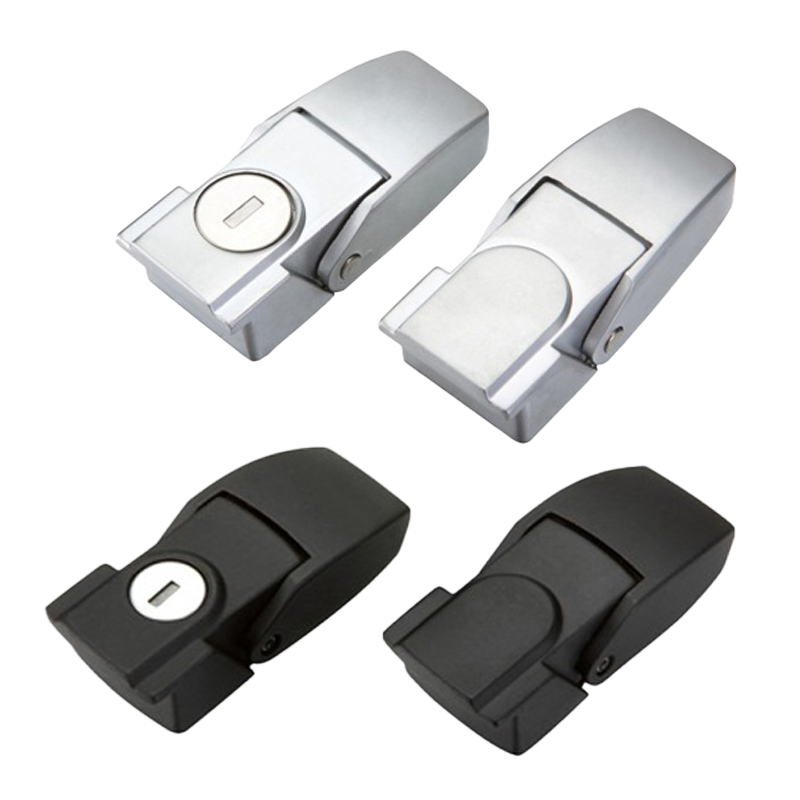
At Hengchieh, we manufacture 21+ draw latch models in zinc alloy, stainless steel, and engineered plastics — covering pull forces from 50 N to over 2,000 N.
2. How Draw Latches Work
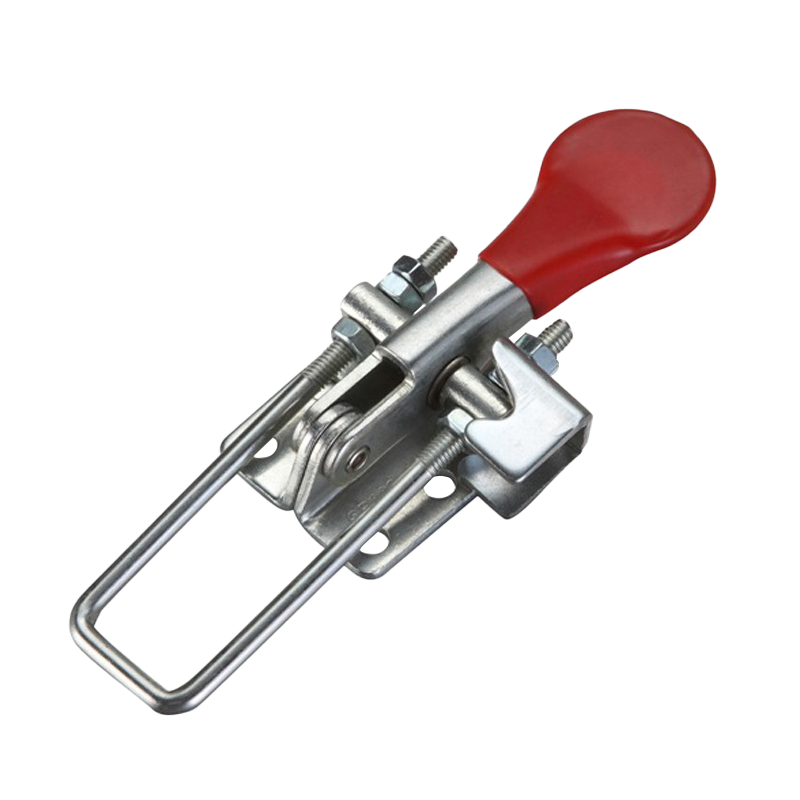
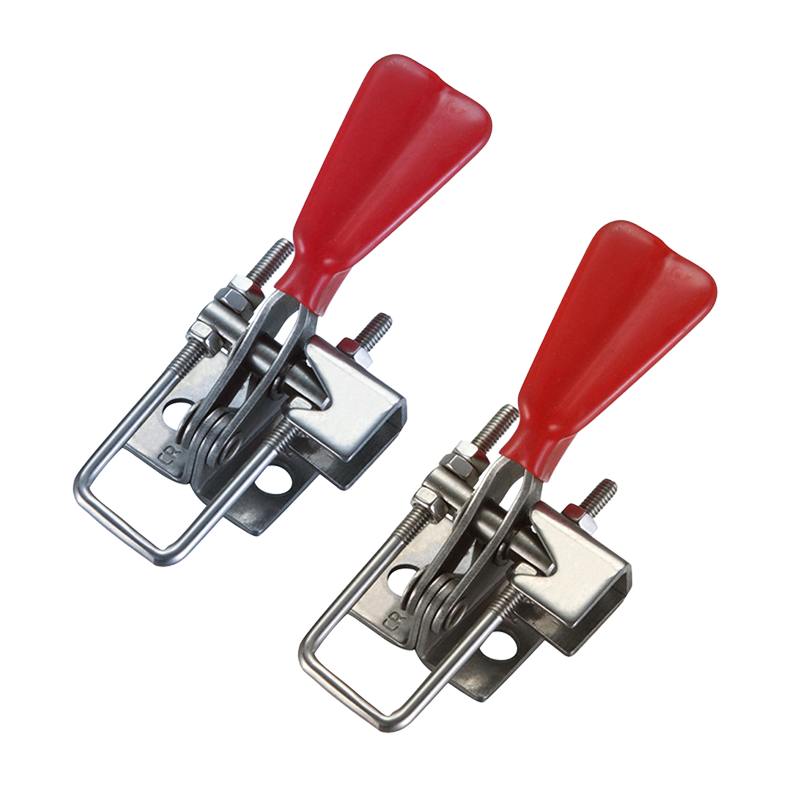
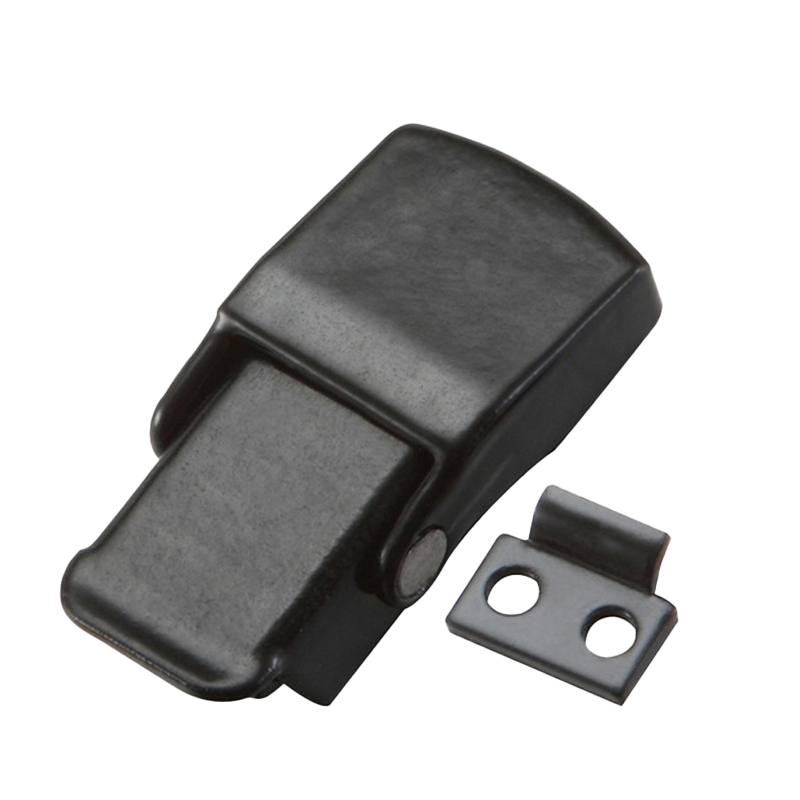
Every draw latch has three parts: a lever (what you grab), ahook or link (the connector), and a keeper (the strike plate on the opposite panel).
Here’s what happens when you close it:
- You flip the lever toward the closed position.
- The hook engages the keeper on the opposite panel.
- As you push past center, the lever shortens the distance between its pivot and the keeper — pulling the surfaces together.
- The gasket compresses. The door seals.
- In over-center designs, the lever locks mechanically past dead-center — vibration and pressure can’t push it open.
Two specs matter most when you’re selecting:
- Draw distance (pull-up): how far the latch pulls the surfaces together. Typically 2–15 mm.
- Holding force: maximum tension when fully closed. Ranges from 50 N (light instrument cases) to 2,000+ N (heavy industrial enclosures).
3. Types of Draw Latches
Over-Center Draw Latches
Use this if: you need the strongest hold and the door must stay shut under vibration, shock, or internal pressure.
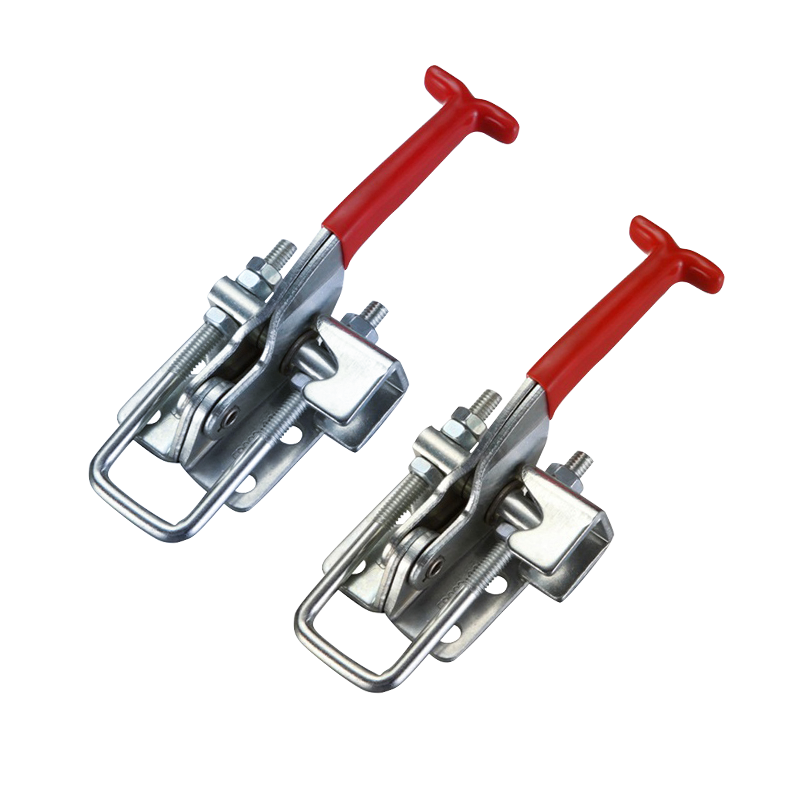
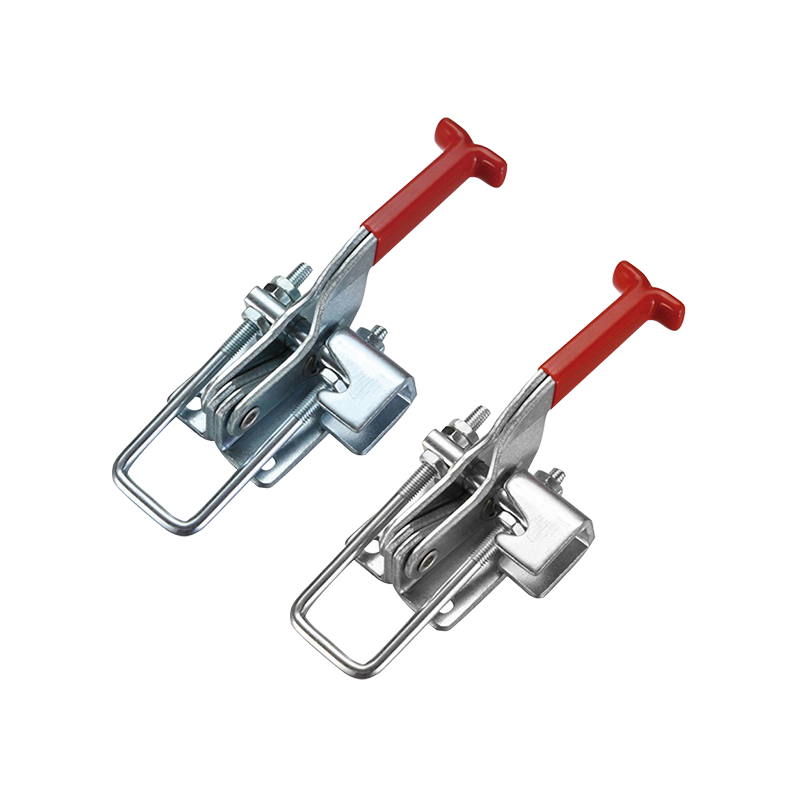
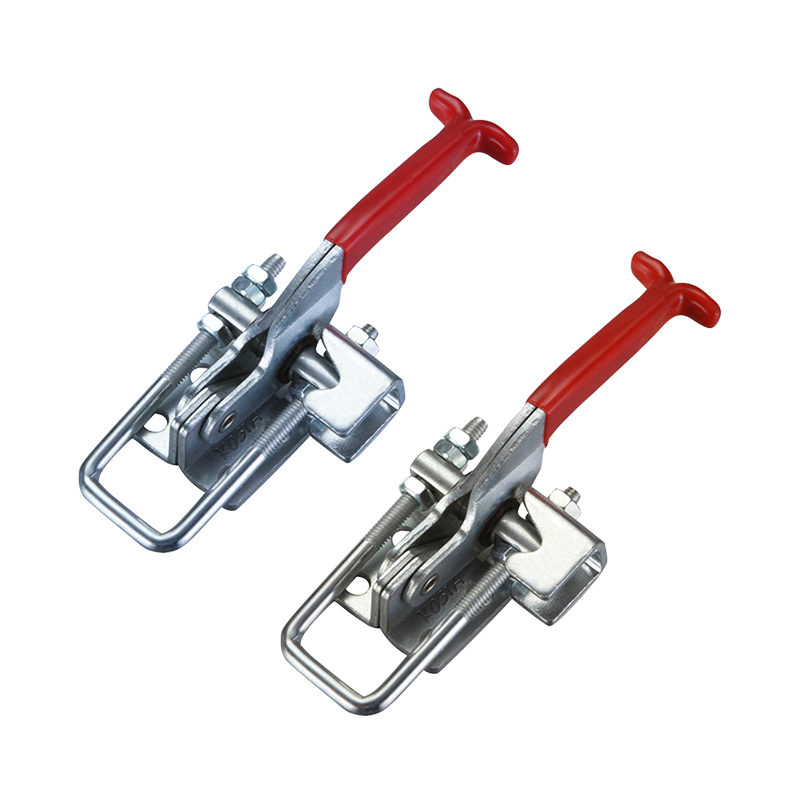
The lever passes over a dead-center point during closure, creating a mechanical lock that won’t rattle open. This is the standard for toolboxes, flight cases, and equipment covers. Available in fixed and adjustable versions — adjustable models let you fine-tune the hook ±3–5 mm for precise gasket compression.
Adjustable Draw Latches
Use this if: your panel tolerances vary, your gasket compresses over time, or you need uniform compression across a large door with multiple latches.
A screw-thread mechanism on the hook or keeper lets you dial in the exact grip range (±5–10 mm). For heavy-duty use, get models with a locknut to prevent the adjustment from vibrating loose.
Concealed Draw Latches
Use this if: you need tamper resistance, clean aesthetics, or nothing protruding from the exterior surface.
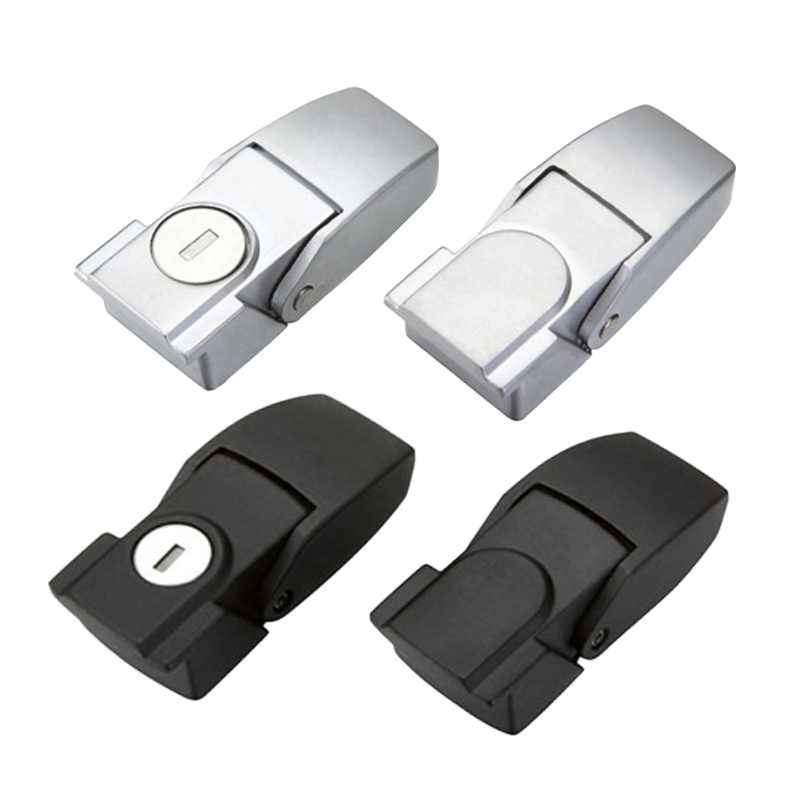
No hardware visible when closed. The mechanism sits inside the panel, operated by a flush button, key, or tool. Common on military cases, medical enclosures, and high-end instrumentation.
Rotary Draw Latches
Use this if: you’re working in tight spaces where a swinging lever would hit adjacent components.
A quarter-turn or half-turn of the handle rotates a cam that pulls the door toward the frame. Lower profile than lever-type latches, but typically lower holding force.

Spring-Loaded Draw Latches
Use this if: your enclosure operates outdoors or in temperature extremes (−40°C to +80°C).
An internal spring maintains constant tension, automatically compensating for thermal expansion, gasket relaxation, and minor alignment changes. The gasket stays compressed no matter the temperature.
Padlockable Draw Latches
Use this if: you need to lock the enclosure and/or comply with OSHA lockout-tagout (LOTO) requirements.
Includes integrated padlock holes, hasps, or built-in key cylinders. Essential for utility enclosures, construction site toolboxes, medical waste containers, and government-spec transit cases.
4. Draw Latch Comparison Table
| Type | Holding Force | Profile | Adjustable | Lockable | Best For |
|---|---|---|---|---|---|
| Over-Center | 200–2,000 N | Protruding | Optional | Padlock hole | Toolboxes, flight cases |
| Adjustable | 150–1,500 N | Protruding | Yes (±5–10 mm) | Padlock hole | Variable-gap enclosures |
| Concealed | 100–800 N | Flush | Some models | Tool-actuated | Medical, military, AV |
| Rotary | 100–600 N | Low-profile | Some models | Key or tool | Tight spaces, thin panels |
| Spring-Loaded | 100–1,000 N | Protruding | Self-adjusting | Padlock hole | Temperature cycling |
| Padlockable | 200–1,500 N | Protruding | Optional | Yes (hasp/key) | Security applications |
5. How to Size a Draw Latch (Don’t Skip This)
Getting the size wrong causes two expensive problems: under-sized latches pop openduring transport (damaged goods, failed IP test), and over-sized latches crush gasketsor deform thin panels. Here’s how to get it right the first time:
Step 1: Determine Draw Distance
Close the door or lid without the latch installed and measure the gap between the two surfaces where the gasket sits. This gap, plus the required gasket compression (typically 20–30% of gasket free height), equals the minimum draw distance. For example: 3 mm gap + 2 mm gasket compression = 5 mm draw distance minimum.
Step 2: Calculate Required Holding Force
The holding force must overcome three loads simultaneously:
- Gasket compression force — gasket stiffness (N/mm) × compression distance (mm) × gasket perimeter length (mm). EPDM gaskets typically require 3–7 N per cm of gasket length for IP65 sealing.
- Internal pressure — if the enclosure is pressurized or subject to pressure differentials (e.g., air handling units, altitude changes in transport), calculate pressure × door area.
- Vibration and shock loads — for transport applications, multiply the static weight supported by the door by the expected G-force (3–5G for road transport, 8–12G for rail, 15–30G for air cargo per MIL-STD-810).
Add a 2× safety factor to the highest calculated force. Divide by the number of latches to get the per-latch requirement.
Step 3: Verify Panel Thickness Compatibility
Every draw latch specifies a panel thickness range. Mounting the latch on a panel outside this range will either prevent proper engagement (too thick) or leave the fastener insecure (too thin). Typical ranges: 0.8–2.5 mm for light-duty, 1.5–4.0 mm for heavy-duty.
6. Materials & Finishes
| Material | Holding Force | Corrosion | Cost | Applications |
|---|---|---|---|---|
| Cold-Rolled Steel, Zinc Plated | High | Moderate (indoor) | Lowest | Indoor enclosures, toolboxes |
| Zinc Alloy Die Cast | Medium–High | Good (chrome plated) | Low–Medium | Equipment covers, panel doors |
| 304 Stainless Steel | High | Excellent | Medium | Outdoor, food processing, marine |
| 316 Stainless Steel | High | Superior | High | Marine, chemical, pharmaceutical |
| Glass-Filled Nylon / Delrin | Low–Medium | Excellent | Low | Electronics, non-conductive needs |
Surface finishes include electro-zinc plating (Fe/Zn 8), chrome plating (decorative and hard chrome), black oxide, powder coating (RAL color matching available), and passivation (for stainless steel). All Hengchieh metal finishes comply with EU RoHS and REACH regulations.
7. Industrial Applications
Toolboxes & Road Cases
Draw latches are the standard closure for professional toolboxes, flight cases, rack cases, and road cases. The over-center mechanism withstands constant road vibration without rattling open. For truck-mounted toolboxes, stainless steel draw latches resist road salt corrosion. See our toolbox lock guide for a complete comparison of all toolbox locking options.
Industrial Enclosures & Electrical Cabinets
Draw latches secure access doors on industrial control panels, junction boxes, and power distribution enclosures. When paired with EPDM or silicone gaskets, they achieve IP65 or NEMA 4X sealing. Multi-point draw latch configurations (4–6 latches per door) distribute compression force evenly across large panel doors. See our enclosure lock guide.
Medical Equipment
Concealed draw latches are used on diagnostic imaging enclosures, autoclave doors, and medical device housings where smooth exterior surfaces are required for hygiene and patient safety. 316 stainless steel construction withstands repeated chemical sterilization.
Transportation & Logistics
Transit cases, cargo containers, and vehicle storage compartments rely on draw latches rated for shock and vibration per MIL-STD-810 or equivalent transport standards. Spring-loaded draw latches are preferred for air cargo where altitude-induced pressure differentials can push doors open.
HVAC & Environmental Control
Air handling units, filter access panels, and cleanroom enclosures use adjustable draw latches to maintain precise gasket compression across temperature cycles. The adjustable mechanism compensates for thermal expansion of the enclosure frame.
8. Draw Latches vs Other Latch Types
| Feature | Draw Latch | Cam Lock | Paddle Latch | Compression Latch |
|---|---|---|---|---|
| Compression | Yes (tension-based) | No | Medium | Yes (cam-based) |
| Profile | Protruding (lever) | Low-profile | Flush | Flush or semi-flush |
| Holding Force | 50–2,000+ N | 20–200 N | 100–500 N | 200–1,500 N |
| Typical IP Rating | Up to IP65 | Up to IP40 | Up to IP67 | Up to IP67 |
| Speed of Operation | Fast (lever flip) | Quarter-turn | Quick release | Quarter-turn |
| Best For | Cases, heavy doors | Small panels | Cabinets, panels | Sealed enclosures |
For detailed guides on each type: cam locks,paddle latches,compression latches, andtoggle latches.
9. Installation Best Practices
- Mark both mounting surfaces simultaneously — close the door, position the latch body, and mark through the mounting holes onto both panels at the same time. This ensures perfect alignment.
- Drill pilot holes — for sheet metal under 2 mm, use self-tapping screws. For thicker panels, drill and tap to M4 or M5. For aluminum, use Heli-Coil inserts if the panel will be opened frequently.
- Mount the latch body first — install the lever side, then close the door and adjust the keeper position for optimal draw.
- Set the draw distance — for adjustable models, turn the hook until the lever closes with firm resistance at the end of travel. The lever should require noticeable effort to close but should not require tools or excessive force.
- Verify gasket compression — close all latches and check the gasket contact line around the full perimeter. Any visible gap indicates insufficient draw or misaligned latches.
- Apply thread locker — for vibration-prone applications, apply medium-strength thread locker (Loctite 243 or equivalent) to all mounting fasteners and adjustment threads.
FAQ
What is a draw latch?
A draw latch (also called a draw catch or draw-pull latch) is a two-piece latching mechanism that uses tension to pull two surfaces tightly together. One piece mounts to the door or lid, the other (the keeper or catch) mounts to the frame. When the lever is closed, it pulls the door toward the frame, compressing any gasket in between. Draw latches are widely used on toolboxes, flight cases, industrial enclosures, and equipment covers.
What is the difference between a draw latch and a toggle latch?
The terms are often used interchangeably. Strictly, a draw latch refers to any latch that draws (pulls) two surfaces together using tension. A toggle latch specifically uses an over-center mechanism — the lever passes over center to lock, creating mechanical advantage. All toggle latches are draw latches, but not all draw latches use the over-center toggle mechanism. Rotary and concealed draw latches, for example, use different locking methods.
How do I calculate the draw latch size I need?
Measure three things: (1) the gap between the lid and body when closed without the latch (this determines the draw or pull-up distance), (2) the total gasket compression force needed (gasket stiffness × compression area), and (3) the total weight the latch must resist (vibration loads, pressure differentials). Add a 2× safety factor to the highest calculated force. Divide total force by the number of latches to get the per-latch requirement, then select a latch rated above that value.
What materials are draw latches available in?
Common materials include zinc-plated steel (most economical, suitable for indoor use), stainless steel 304 (outdoor and food processing), stainless steel 316 (marine and chemical environments), and glass-filled nylon or Delrin (non-conductive, lightweight). Zinc alloy die-cast latches offer a good balance of strength and corrosion resistance at moderate cost.
Can draw latches be locked?
Yes. Many draw latches include a padlock hole or hasp where a padlock can be inserted to prevent the latch from being opened. Some models integrate a key-locking cylinder directly into the latch body. For applications requiring tamper resistance, look for concealed draw latches with tool-actuated operation that cannot be opened without a specific tool.
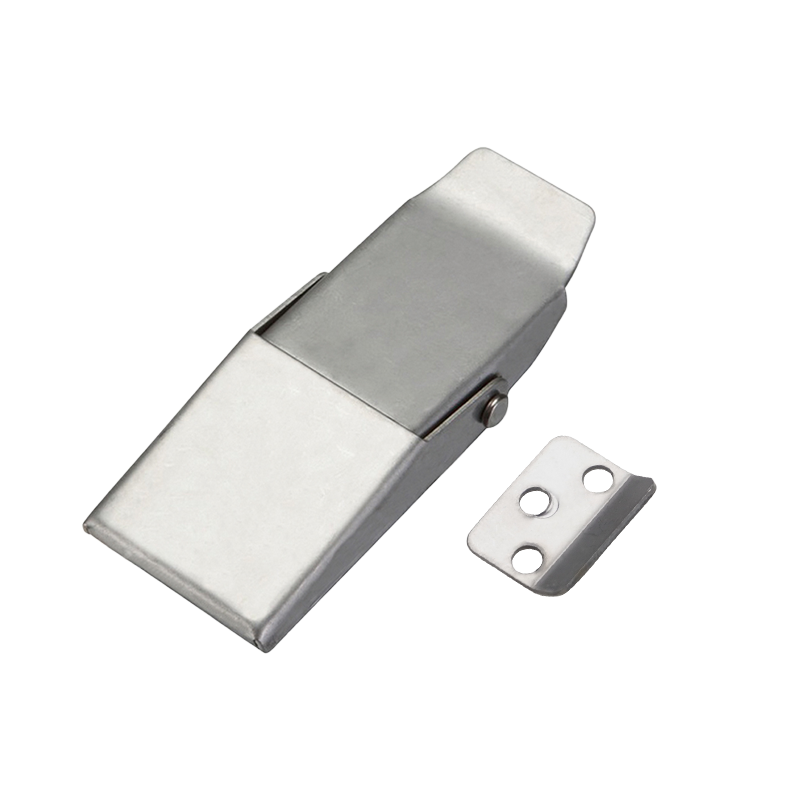
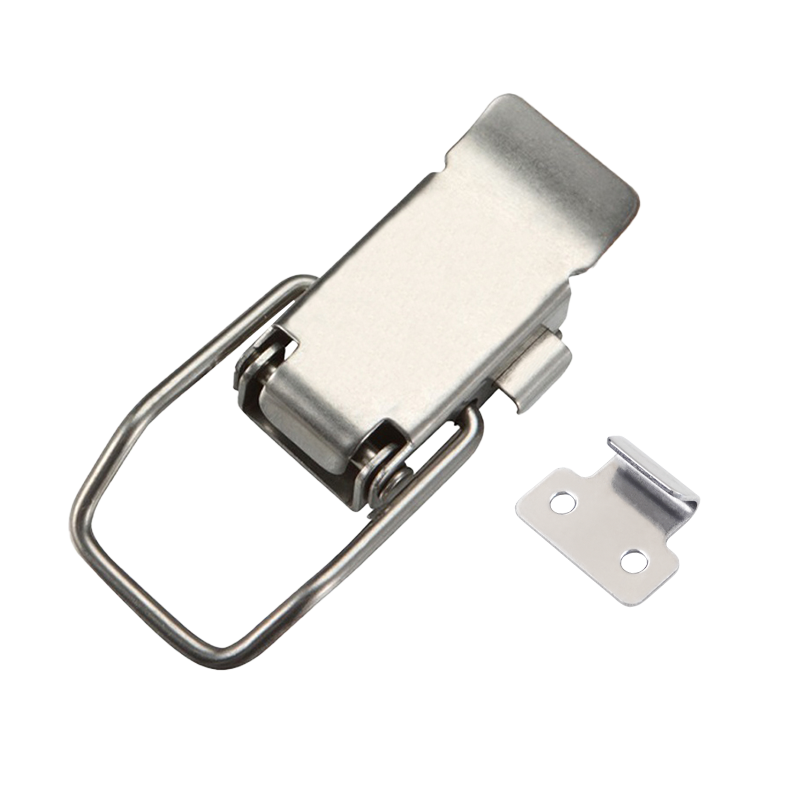
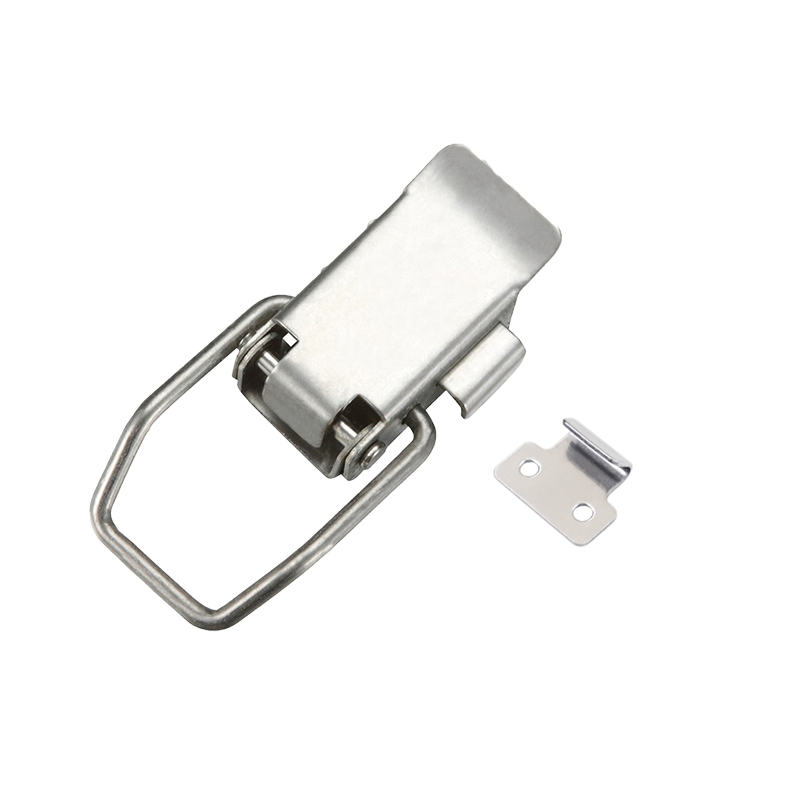
Draw Latches & Toggle Latches from Hengchieh
Related Guides
Toggle Latches Guide
Complete industrial selection guide
Compression Latches Guide
IP ratings, gasket force, material specs
Types of Toolbox Locks
T-handle, paddle, cam & compression compared
Paddle Latches Guide
Flush-mount, T-handle & swing handle types
Zinc Alloy vs Stainless Steel
Material selection for hardware longevity
Draw Latches: Industrial Load Ratings
Detailed load data for heavy-duty applications
IP65 Waterproof Locks Guide
Sealing hardware for outdoor enclosures
Draw Latch Manufacturer — 21 Models, OEM Available
Selection guide, load ratings, materials, MOQ & factory direct pricing
Need Custom Draw Latches?
35+ years of precision die casting and stamping. Custom force ratings, materials, finishes. MOQ 500 pcs.