
Buyer's Guide
Cam Locks: 75 Models, Types & Keying Options
Cam lock types explained: flat key, tubular, dimple key & electronic. Zinc alloy, stainless steel, brass. Sizing chart, keyed-alike & master key options. 75+ models, industrial grade, OEM available. Get quote.
Quick Answer
A cam lock is a cylindrical lock with a rotating metal tongue (“cam”) that secures cabinet doors, drawers, and panels with a simple key turn. Main types: flat-key (standard, lowest cost), tubular-key (pick-resistant), disc-detainer (high-security), and tool-operated (screwdriver/hex). Standard body diameters: 16mm, 19mm, 22mm. Price range: $0.50–$5.00. Hengchieh makes 75+ cam lock models.
1. What Is a Cam Lock?
Need a simple, inexpensive lock for a cabinet door, drawer, or access panel? In most cases, a cam lock is the answer. It’s the most widely used lock type in commercial and industrial hardware — and for good reason.
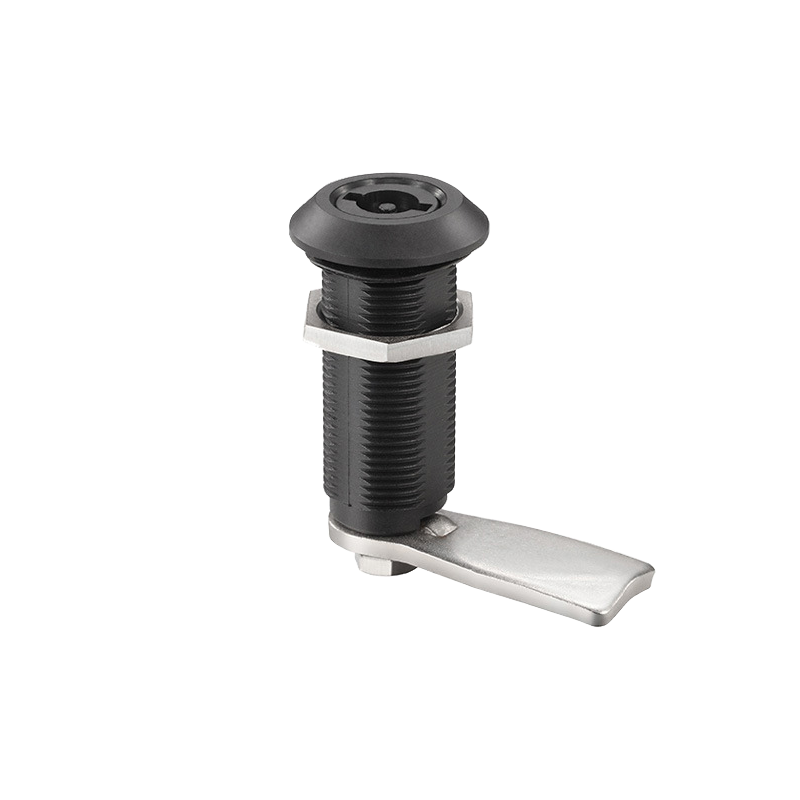
A cam lock consists of a cylindrical body, a key-operated cylinder, and a rotating metal tongue (the “cam”) that engages a strike plate to hold the door shut.
Cam locks are found everywhere: filing cabinets, server racks, vending machines, mailboxes, lockers, display cases, RV compartments, and industrial enclosures. Their popularity comes from their simplicity, reliability, compact size, and the wide range of customization options available.
2. How Cam Locks Work
The operating principle is straightforward. Insert the key and turn — typically 90° or 180° depending on the model. The key rotation transfers to the cam (a flat metal piece attached to the back of the cylinder), which swings to either a locked or unlocked position. In the locked position, the cam sits behind the door frame or inside a strike pocket, preventing the door from opening.
The beauty of this mechanism is its minimal parts count: just the cylinder, cam, key, and mounting hardware. Fewer moving parts means higher reliability and longer service life — typically 100,000+ cycles for a quality zinc alloy cam lock.
3. Types of Cam Locks
Cam locks come in several configurations to match different security levels and use cases:
By Key Type
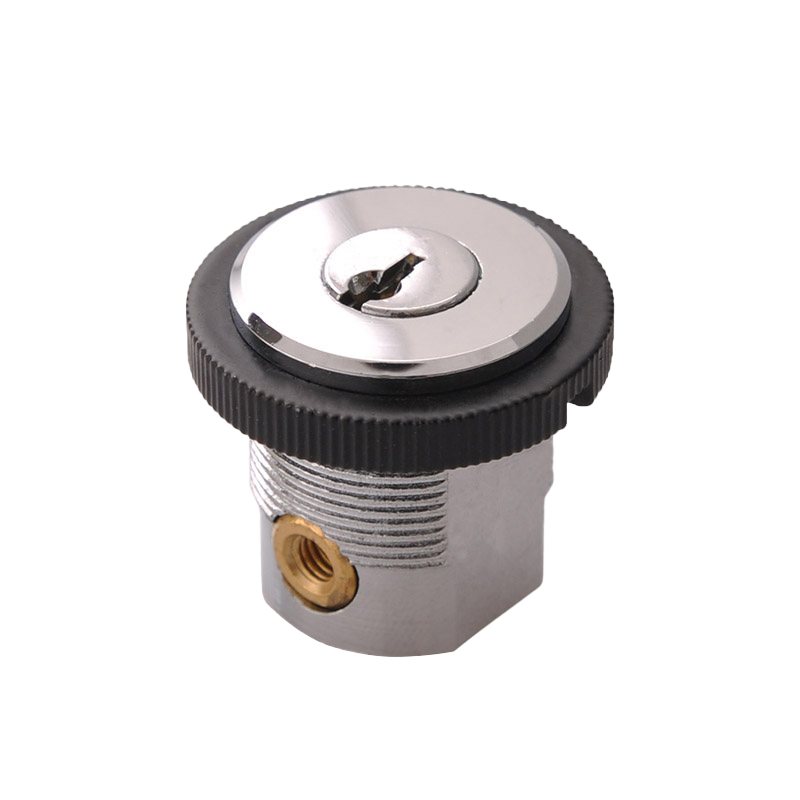
Flat key cam locks are the most common type, using a standard flat key similar to a house key. They offer moderate security and are available in thousands of key combinations.Tubular key cam locks use a round key with pins arranged in a circle, providing higher pick resistance. They're common in vending machines and ATMs, and they're the usual upgrade on tool chests (seebest lock for a roll cab).Dimple key cam locks use keys with cone-shaped dimples, offering high security with complex bitting patterns. Hengchieh's MS705 series includes all three key types.
By Rotation
90° rotation models turn a quarter turn to lock/unlock — faster operation, ideal for high-frequency access.180° rotation models turn a half turn, providing a more secure cam engagement. Some models offer360° free rotation for applications where the cam position needs to vary.
By Function
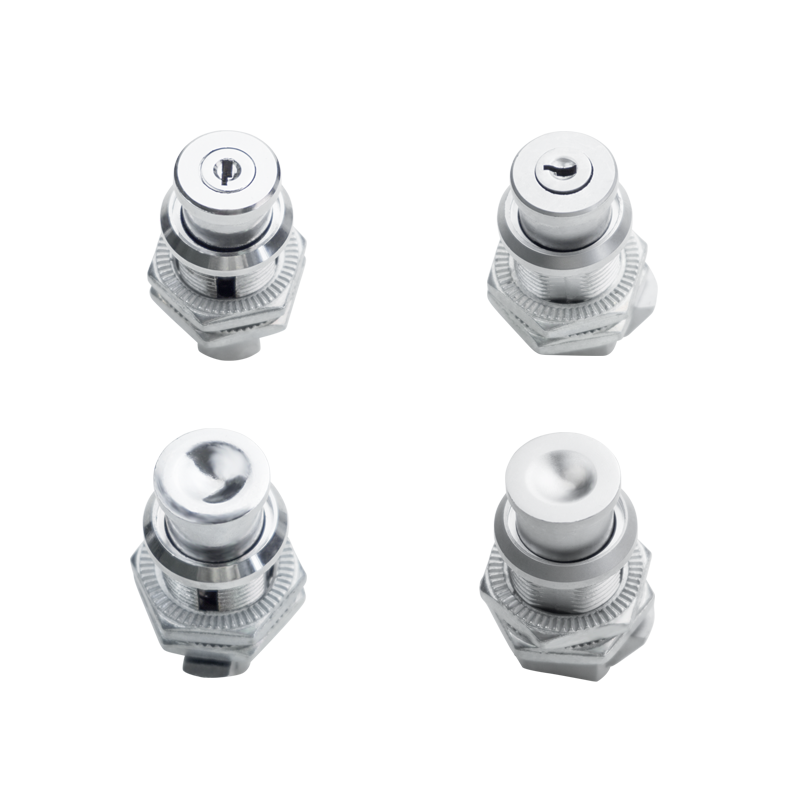
Standard cam locks simply lock and unlock. Wafer cam locks use a disc tumbler mechanism for economy applications.Pin tumbler cam locks provide higher security. Electronic cam locks (like Hengchieh's MS712D-1) add electronic control for remote access management — increasingly popular for EV charging stations and smart vending machines.
| Operator Type | Tumbler | Security | Key Management | Typical Applications |
|---|---|---|---|---|
| Flat-key (pin tumbler) | Pin tumbler | ★★★☆☆ | KA / KD / MK | Filing cabinets, office desks, lockers |
| Flat-key (wafer) | Wafer tumbler | ★★☆☆☆ | KA / KD | Office furniture, low-value storage |
| Tubular-key | Tubular (7-pin) | ★★★☆☆ | KA / KD | Vending machines, ATMs, mailboxes |
| Disc-detainer | Rotating disc | ★★★★☆ | KA / KD / MK | Outdoor enclosures, utility boxes, harsh environments |
| Tool-operated | None | ★★☆☆☆ | No key inventory | Electrical panels (screwdriver / hex / triangle) |
| Thumb-turn / knob | None | ★☆☆☆☆ | Tool-free | Quick-access panels, RV compartments |
| Electronic | Digital | ★★★★★ | Remote / app / RFID | EV chargers, smart vending, server racks |
“Cam Lock” vs. “Camlock Fitting” — A Common Confusion
If you searched for “cam lock” and found results about hose couplings, you’re not alone. A cam lock (two words) is a cabinet/panel locking device covered in this guide. Acamlock fitting (one word) is a cam-and-groove coupling used to quick-connect hoses and pipes in fluid transfer. They share a name but belong to completely different product categories.
Industrial & Specialty Cam Lock Variants
Beyond standard cabinet models, several specialty cam locks address specific industrial requirements:
IP-rated / sealing cam locks incorporate O-ring gaskets between the lock face and the panel, achieving IP65 or higher ratings per IEC 60529. They prevent dust and water ingress in outdoor enclosures, EV charger cabinets, and telecommunications equipment. Hengchieh’s MS816 and MS705-G series include integral silicone gaskets.
Compression cam locks use a cam that pulls the door inward against a gasket seal as the lock engages. They combine locking with environmental sealing in a single mechanism — commonly used on NEMA 4X rated enclosures. See our compression latch guidefor details.
Padlock-ready cam locks feature a hasp or shackle hole that accepts a padlock for dual-security lockout/tagout compliance per OSHA 29 CFR 1910.147. Common in electrical panels and industrial machinery.
Captive-key cam locks trap the key in the cylinder when unlocked, ensuring the cabinet is always relocked after access. Used in pharmaceutical storage, evidence lockers, and medical equipment.
4. Materials & Finishes
The body material directly affects durability, corrosion resistance, and cost:
Zinc alloy is the industry standard — it's die-cast for precision, offers good corrosion resistance, and takes plating well. About 80% of industrial cam locks use zinc alloy bodies. Common finishes include bright chrome, satin chrome, and black powder coating.
304 stainless steel is chosen for harsh environments: outdoor enclosures, marine applications, food processing equipment, and medical environments. It costs more but provides superior corrosion resistance. Hengchieh offers mirror-polished and brushed stainless options.
Nylon (PA) bodies are used where electrical insulation is required, or where the lock must not scratch the surrounding panel. They're also lighter and lower cost.
Brass is occasionally used for decorative applications or extreme marine environments where even stainless steel might corrode.
5. Keying Options
Choosing the right keying system is critical for multi-unit installations:
Keyed alike (KA) means every lock in your order opens with the same key. Perfect for a facility manager who needs to access 50 server cabinets with one key. Hengchieh's MS705 supports keyed-alike orders across multiple batches — your reorder will match your original keys.
Keyed different (KD) means each lock has a unique key. Standard for lockers, mailboxes, and any application where different users need private access.
Master keyed (MK) systems allow individual keys to open specific locks, while a master key opens all locks. This is common in commercial buildings and institutional settings.
6. How to Choose the Right Size
Three measurements matter when selecting a cam lock:
Body diameter: Determines the mounting hole size. Common sizes are 16mm (⅝"), 19mm (¾"), and 22mm (⅞"). Measure your panel's existing hole or check the specification for a new installation.
Body length: Must accommodate your panel thickness plus the mounting nut (usually 3-5mm). For a 2mm steel panel, a body length of 16-20mm is typical. For thicker panels (up to 20mm), extended body lengths are available.
Cam length and type: The cam must be long enough to reach the strike plate or door frame. Common cam types include straight cams, offset cams, and hook cams. Many cam locks ship with multiple cam options so you can choose the best fit on-site.
| Body Diameter | Mounting Hole | Cutout Shape | Typical Body Length | Common Uses |
|---|---|---|---|---|
| 16 mm (⅝″) | 16.2 mm round | Round / D-shape | 11–25 mm | Mailboxes, drawers, small cabinets |
| 19 mm (¾″) | 19.2 mm round | Round / D-shape | 16–30 mm | Most common — cabinets, lockers, enclosures |
| 22 mm (⅞″) | 22.5 mm round | Round / double-D | 18–40 mm | Vending machines, heavy-duty panels, outdoor boxes |
| 27 mm (1&frac116″) | 27.2 mm round | Round | 20–50 mm | Telecom cabinets, outdoor utility enclosures |
Shaft profiles matter for replacements. Cam locks use different drive shaft profiles:round (most common), double-D (anti-rotation, ~16.2 mm × 19.3 mm), square, and oval. These are not interchangeable — always measure the existing cutout before ordering a replacement.
7. Common Applications
Cam locks serve virtually every industry where secure access to a panel, door, or drawer is needed. Industrial and IT equipment uses them in server racks, network enclosures, and electrical distribution panels. Commercial furniture relies on cam locks for filing cabinets, office desks, and display cases. Vending and automated equipment uses them for coin mechanisms and access panels. Vehicle and RV applications include storage compartments, toolboxes, and utility access doors. Medical equipment uses them in instrument carts, supply cabinets, and medication storage.
8. Installation Guide
Installing a cam lock takes about 5 minutes with basic tools:
First, drill a mounting hole matching the lock body diameter (typically 19mm). Insert the lock body from the front of the panel. Thread the mounting nut onto the back of the body and tighten by hand, then snug with pliers — do not over-tighten. Attach the cam to the back of the lock body using the provided screw. Test the operation: insert the key, turn to verify the cam engages and disengages smoothly. Adjust the cam angle if needed to align with your strike plate or door frame.
Related reading: For a side-by-side comparison of cam locks vs other cabinet lock types, see our cam lock vs cabinet locks comparison. If you need a higher-security lock for electrical panels, ourelectrical panel lock guide covers NEC-compliant options. For material selection between zinc alloy and stainless steel, read thematerial comparison guide. Need help choosing a cabinet lock? We cover cam locks, push locks, and electronic options. For sourcing custom locks from China, check ourindustrial hardware sourcing guide.
9. Frequently Asked Questions
What is a cam lock?
What materials are cam locks made from?
What does "keyed alike" mean?
How do I choose the right cam lock size?
Can cam locks be customized?
Browse Our Cam Lock Range
Hengchieh manufactures 75 cam lock models in zinc alloy, stainless steel, and nylon. From standard cabinet locks to custom electronic cam locks — all from one factory.

Related Guides
Cam Locks vs Cabinet Locks Compared
Side-by-side with push locks, magnetic & electronic
Compression Latches Guide
IP ratings, gasket compression, sealed enclosures
8 Types of Toolbox Locks Compared
T-handle, paddle, cam & compression compared
Quarter-Turn Locks Guide
Panel fasteners & quarter-turn cam locks
Cabinet Lock Buying Guide
All cabinet lock types & selection criteria
MS Series Lock Model Numbers Guide
Decode MS cam lock model numbers & specs