
EV Die Casting Parts: Battery & Motor Housings
The electric vehicle revolution has transformed the die casting industry. A conventional internal combustion engine (ICE) vehicle contains roughly 10-15 kg of die-cast aluminum parts. A typical battery electric vehicle (BEV) uses 30-50 kg — a 3-5x increase. The reason is straightforward: EVs need lightweight structural parts (range depends on weight), excellent thermal management (batteries and motors generate enormous heat), and electromagnetic shielding (high-voltage power electronics create interference). Aluminum die casting delivers all three.
As an IATF 16949 certified manufacturer already producing EV-related die castings — motor housings, controller enclosures, and thermal management parts — we see this market shift daily on our factory floor. Here is a guide to the key EV die casting applications and what makes them technically demanding.
EV Motor Housings
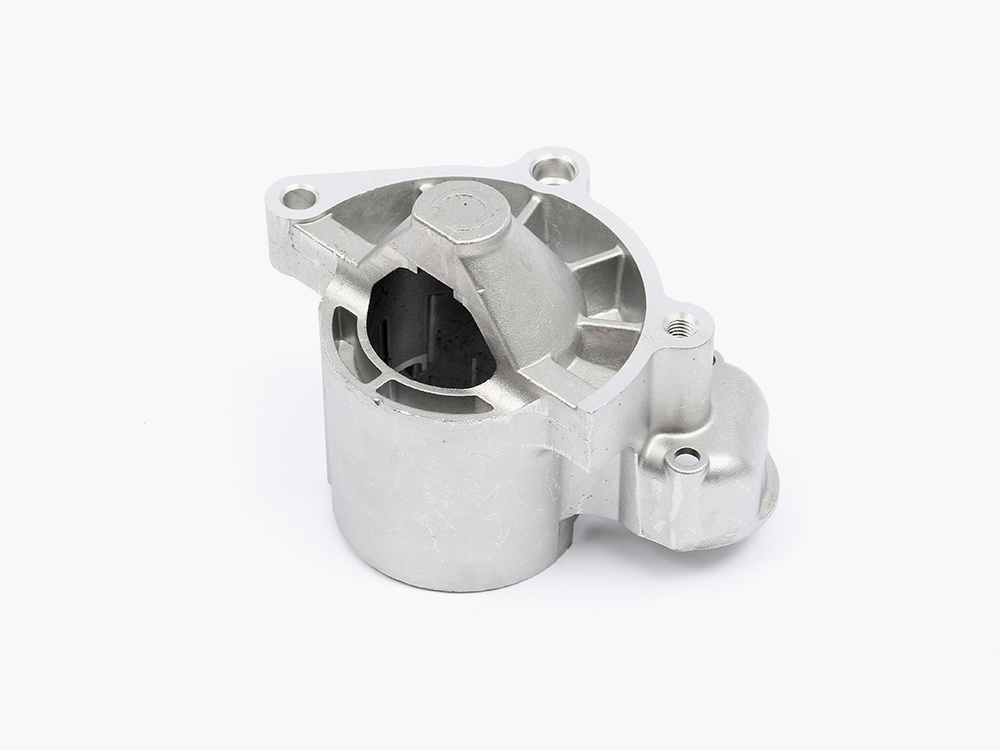
Motor housing with cooling fins
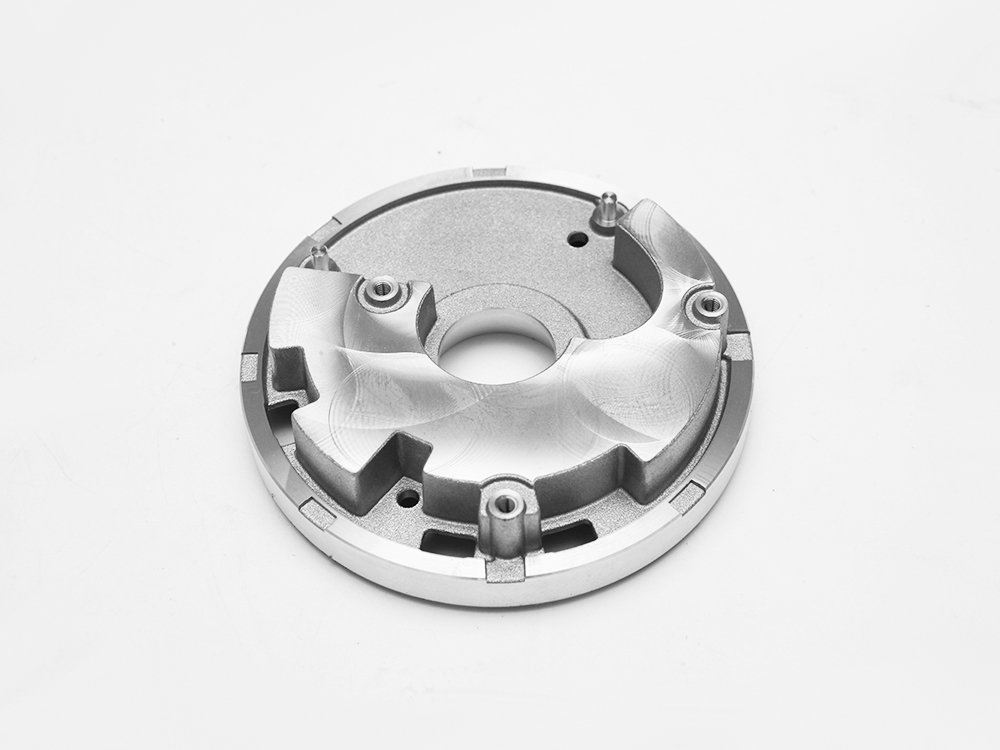
Motor end bell
EV traction motors operate at sustained power levels of 100-300 kW — generating far more heat than ICE alternators or starter motors. The motor housing must dissipate this heat efficiently while maintaining precise bearing alignment under thermal expansion. We cast EV motor housings in ADC12 with integrated cooling channels and precision-machined bearing bores holding ±0.02mm concentricity.
Key challenges include maintaining bearing bore roundness after thermal cycling (-40°C to +150°C), achieving sufficient surface area for heat rejection through integrated fin designs, and ensuring NVH (noise, vibration, harshness) performance through precise mass balance and stiffness-optimized geometry.
Inverter & Controller Enclosures
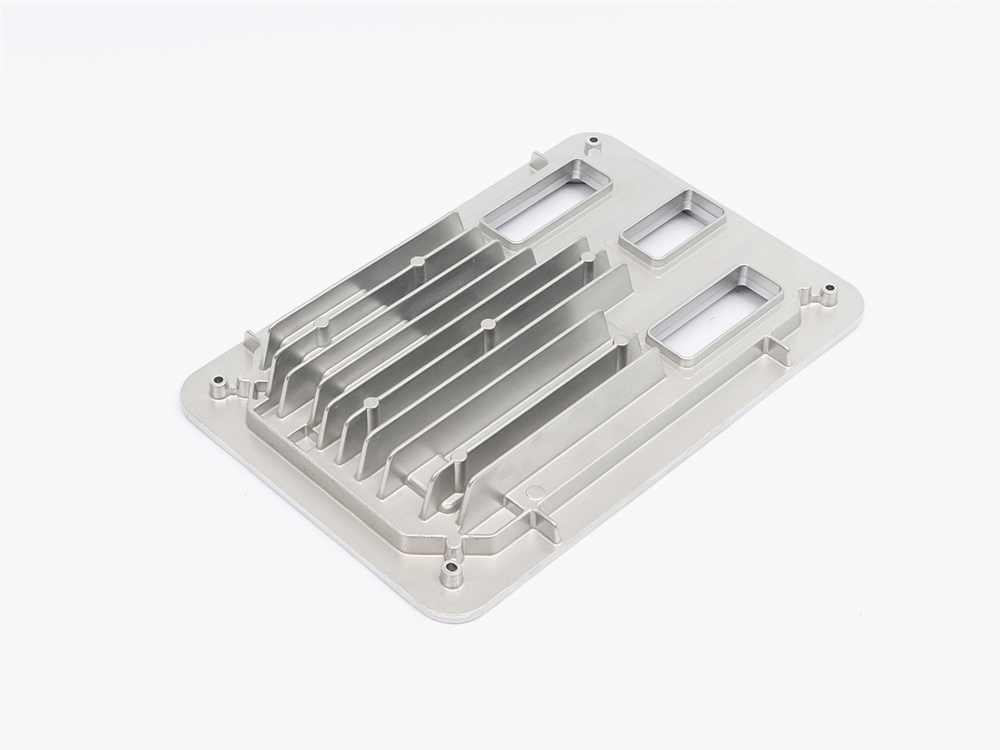
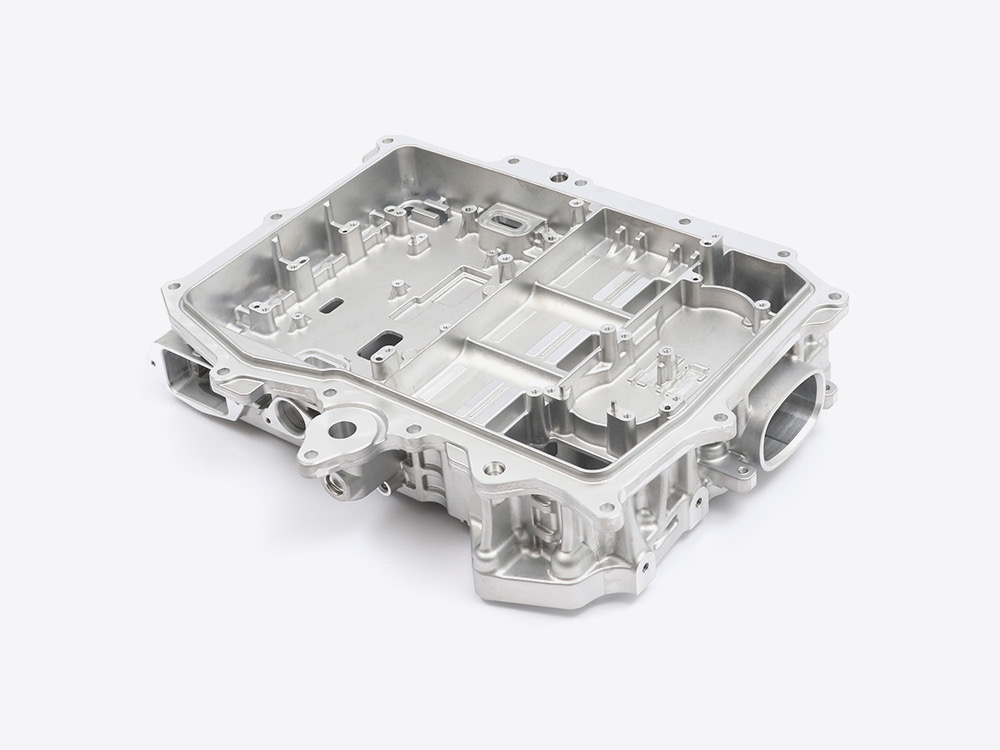
The inverter converts DC battery power to AC for the motor — it is the most electrically sensitive component in an EV. The die-cast housing must provide electromagnetic interference (EMI) shielding effectiveness exceeding 60 dB across 100 MHz to 6 GHz, a flat sealing surface (±0.05mm) for IP67 gasket compression, and a thermal path capable of dissipating 2-5 kW of waste heat from IGBT/SiC power modules.
We achieve this by casting the housing as a single integrated part with built-in heat sink fins, EMI gasket grooves, and connector mounting bosses — eliminating the assembly of multiple stamped and machined components that older designs required. A single die-cast inverter housing replaces what was previously a 12-15 piece welded and bolted assembly.
Thermal Management Parts
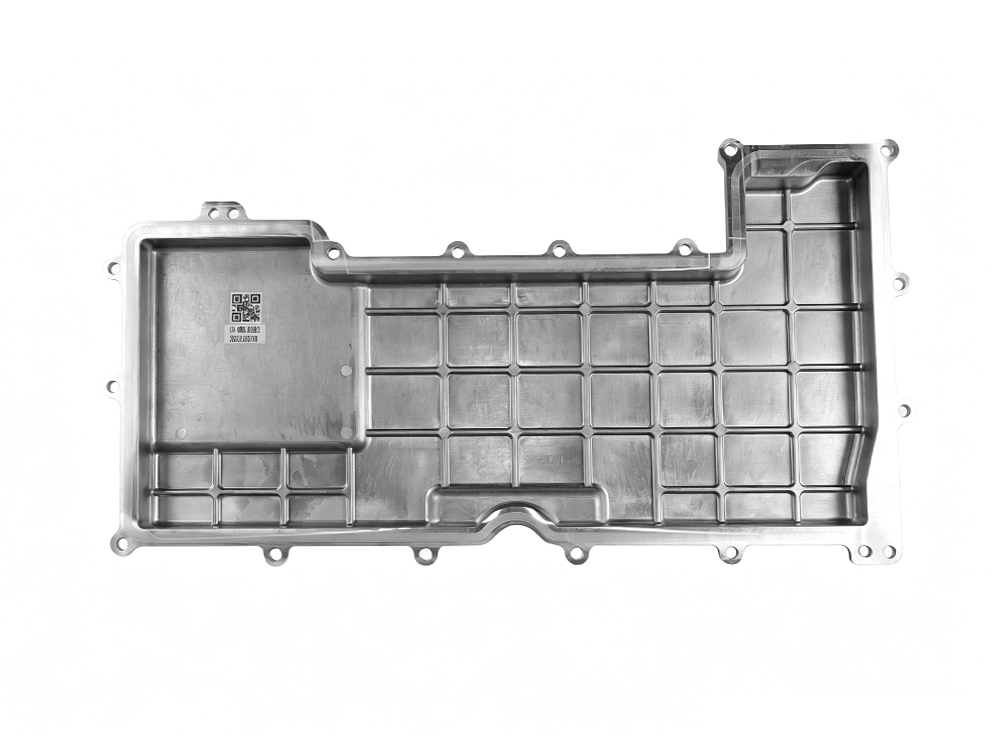
EV battery packs must be kept within 15-35°C for optimal performance and longevity. This requires liquid cooling systems with die-cast aluminum water channel housings (also called cold plates or cooling manifolds) that circulate glycol coolant directly through cast-in channels adjacent to battery cells.
Manufacturing these parts is among the most technically demanding die casting applications we handle. The internal coolant passages are formed using slide cores and loose pieces in the die, requiring complex tooling with 4-8 moving elements. Every part undergoes 100% helium leak testing at pressures 2-3x above operating pressure (typically 3-5 bar test pressure versus 1.5-2 bar operating). A single leak in a battery cooling circuit can cause thermal runaway — a safety-critical failure mode.
EV Charging Infrastructure Components
Beyond the vehicle itself, the EV charging ecosystem requires die-cast components for charging stations, wall boxes, and DC fast chargers. We supply die-cast aluminum and zinc alloy parts for charging connectors (CCS/GB/T housings), charging station enclosures (IP65-rated, outdoor-grade with UV-resistant powder coating), cable management brackets and strain reliefs, and power distribution housings for charging farms.
Charging infrastructure components face unique challenges: outdoor exposure requiring 1,000+ hour salt spray resistance, high voltage safety requiring UL/IEC certification, and vandal-resistant designs requiring Zamak 5 zinc alloy locks and latches — where our core locking hardware expertise directly applies.
The EV Die Casting Market Opportunity
The shift to electric vehicles represents a structural expansion of the aluminum die casting market. Key trends we see from our order book include a shift from iron/steel to aluminum (every kg saved in vehicle weight adds approximately 0.1 km of range — OEMs are actively converting steel stampings to aluminum castings), part consolidation through larger castings (what was previously assembled from 10-20 stamped parts is now a single die casting, reducing weight, assembly cost, and failure points), and higher quality requirements (EV parts face stricter dimensional, porosity, and surface requirements than ICE equivalents due to electromagnetic sensitivity and thermal demands).
For die casting manufacturers, EV is not just a new market — it is a higher-value market. EV parts command 20-40% higher margins than equivalent-size ICE parts because of tighter specifications, more secondary machining, and mandatory testing requirements. The barrier to entry is IATF 16949 certification and the capital investment in vacuum-assisted HPDC, leak testing, and X-ray inspection — capabilities that not every die caster possesses.
Frequently Asked Questions
What die casting parts are used in electric vehicles?
Why is aluminum die casting critical for EVs?
What certifications do EV die casting suppliers need?
Looking for an EV die casting partner?
IATF 16949 certified. Motor housings, inverter cases, thermal management parts. 100% leak testing and X-ray inspection standard.
Related: Aluminum Die Casting Parts · Automotive Die Casting Guide · Aluminum vs Zinc Die Casting · Casting Shrinkage Guide · EV Charging Cabinet Hardware · Compression Latch Guide