
Aluminum vs Zinc Die Casting: Which Is Best?
Choosing between aluminum and zinc for die casting is one of the most consequential decisions in product development. The right alloy determines your part's strength, weight, surface quality, cost structure, and even which finishing processes are available to you. As a manufacturer with 35+ years of experience casting both alloy families — and IATF 16949 certification for automotive-grade production — we see this decision from the factory floor every day.
This guide breaks down the real-world differences between aluminum and zinc die casting, with data from our production lines rather than textbook generalities.
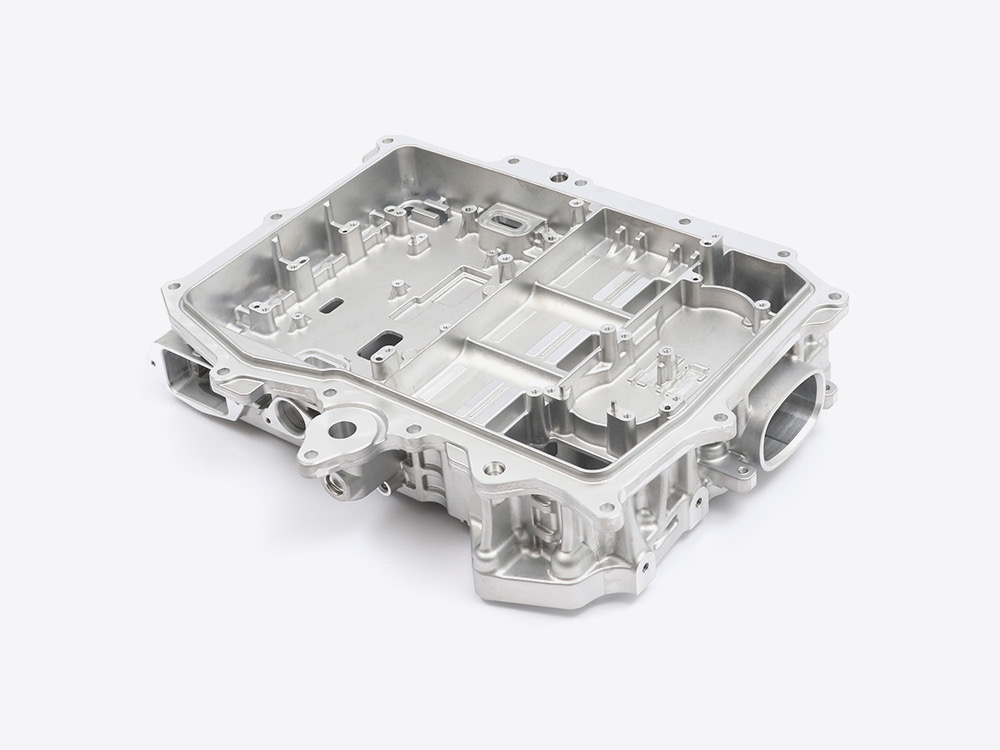
Aluminum die cast inverter housing
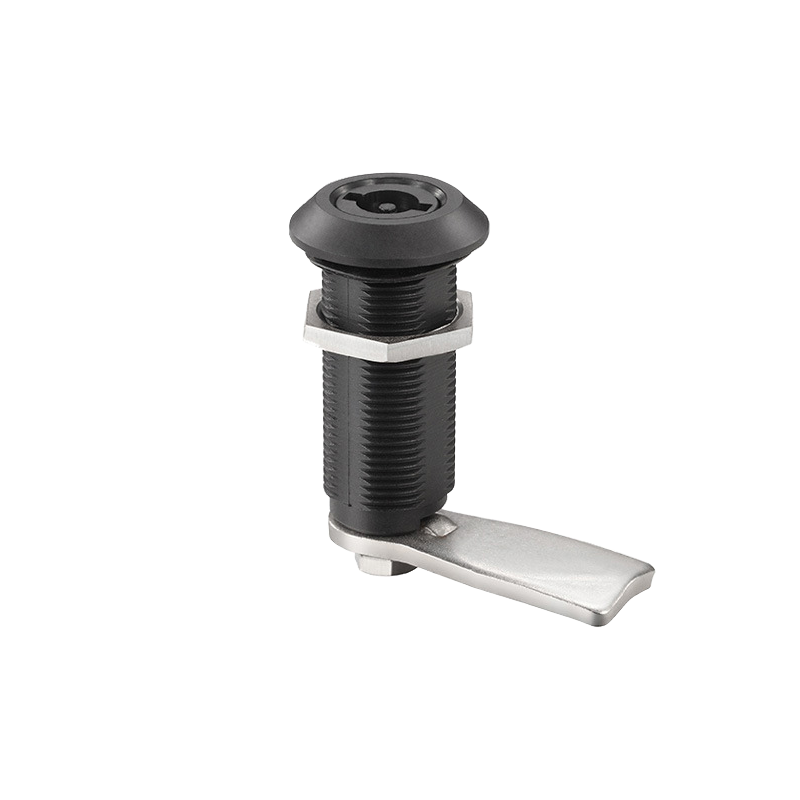
Zinc alloy die cast cam lock
Head-to-Head Comparison: Aluminum vs Zinc Die Casting
| Property | Aluminum (ADC12) | Zinc (Zamak 5) | Winner |
|---|---|---|---|
| Density | 2.74 g/cm³ | 6.7 g/cm³ | Aluminum (2.5× lighter) |
| Tensile Strength | 310 MPa | 331 MPa | Zinc (per volume) |
| Min Wall Thickness | 1.0-1.5 mm | 0.6-0.8 mm | Zinc |
| Tolerance | ±0.05 mm | ±0.03 mm | Zinc |
| Surface Finish (as-cast) | Ra 3.2-6.3 μm | Ra 0.8-1.6 μm | Zinc (4× smoother) |
| Mold Life | 80K-150K shots | 300K-500K+ shots | Zinc (3-5× longer) |
| Cycle Time | 45-90 sec | 15-30 sec | Zinc (2-3× faster) |
| Melting Point | 577-638°C | 380-390°C | Application-dependent |
| Chrome Plating | Poor adhesion | Excellent | Zinc |
| Anodizing | Excellent | Not possible | Aluminum |
| Thermal Conductivity | 96 W/m·K | 109 W/m·K | Close (zinc slightly higher) |
| EMI Shielding | Good | Excellent | Zinc |
When to Choose Aluminum Die Casting
Aluminum is the default choice when weight matters. At 2.74 g/cm³ versus zinc's 6.7 g/cm³, aluminum parts weigh less than half as much — a critical advantage in automotive, aerospace, and portable equipment applications. We manufacture aluminum die cast parts for several key industries.
Automotive powertrain components are our largest aluminum category. ECU housings, inverter cases, water channel housings for EV thermal management, and oil pump covers all demand aluminum's combination of light weight, heat dissipation, and structural integrity. Our IATF 16949 certification ensures these safety-critical parts meet automotive quality standards.
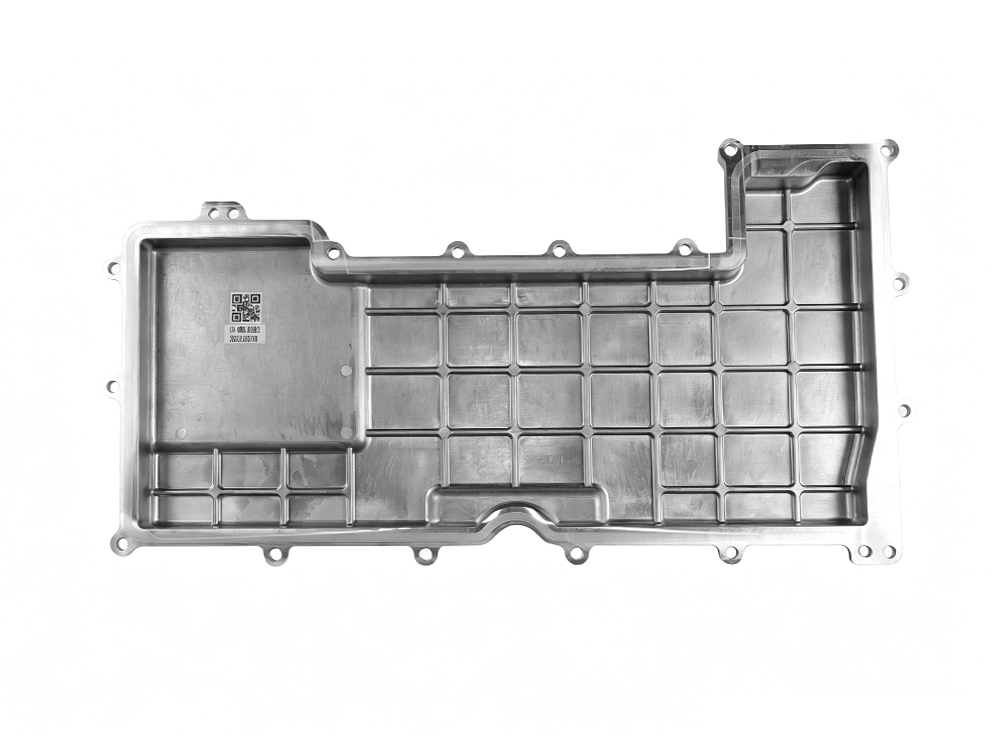
Industrial equipment housings — motor end bells, gearbox cases, pneumatic valve manifolds — benefit from aluminum's ability to handle larger part sizes (up to 5 kg+) while maintaining acceptable wall thickness. Aluminum also tolerates higher operating temperatures than zinc, making it suitable for motor and compressor applications.
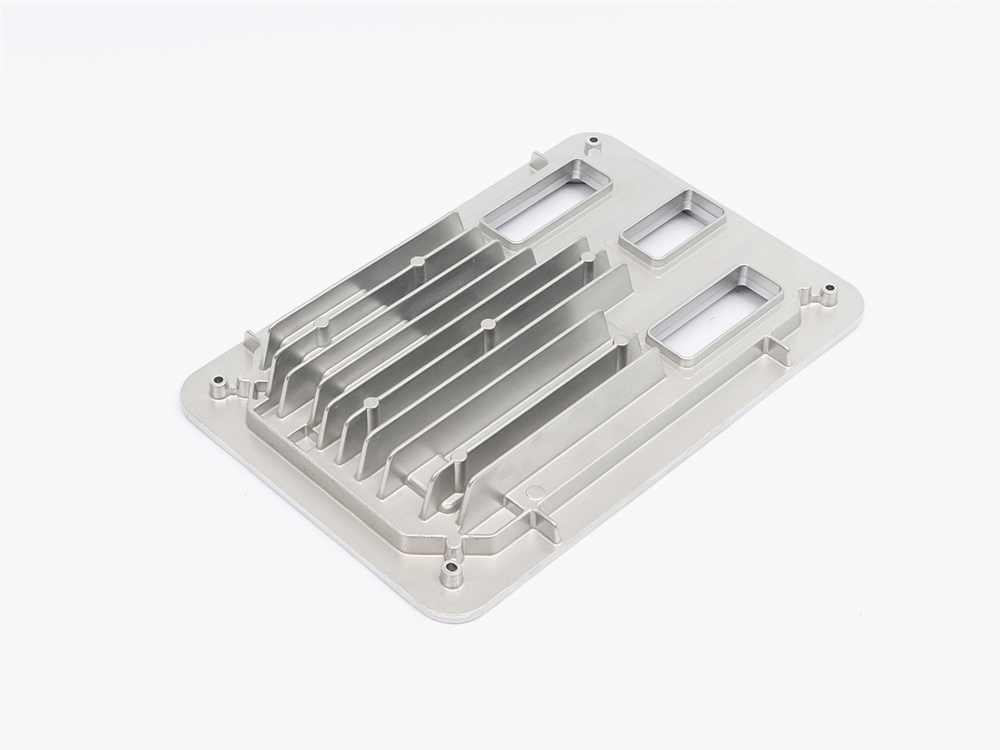
Heat management parts like heat sinks, LED lamp housings, and power electronics enclosures leverage aluminum's excellent thermal conductivity and natural anodized finish for corrosion protection.
When to Choose Zinc Die Casting
Zinc wins when you need precision, surface quality, and cost efficiency on smaller parts. Its lower melting point (380°C vs 638°C for aluminum) translates into faster cycles, longer tool life, and lower energy consumption — all of which compound into significant cost savings at volume.
Locking hardware and security devices are zinc's sweet spot. Cam locks, panel locks, cylinder cores, and swing handles all require tight tolerances for key operation, decorative chrome finishes for aesthetics, and high mechanical strength in compact form factors. At Hengchieh, our 358+ lock and latch models are all zinc die cast.
Connectors and EMI enclosures benefit from zinc's superior EMI/RF shielding properties and ability to hold ultra-tight tolerances (±0.03mm) for mating surfaces. Data connectors, terminal housings, and telecom enclosures are common zinc applications.
Furniture and architectural hardware — handles, knobs, hinges, and decorative fittings — exploit zinc's exceptional plating characteristics. A zinc die casting can achieve mirror-finish chrome, satin nickel, antique brass, or PVD gold with no intermediate copper layer, which is impossible with aluminum.
Real-World Cost Analysis
Cost comparisons between aluminum and zinc die casting are misleading if they only look at raw material prices. Here is a complete cost breakdown from our production experience:
For a small part (50g finished weight), zinc is typically 15-30% cheaper per piece despite having higher material density. The savings come from 3× faster cycle time (15s vs 45s), which triples machine throughput, and 3-5× longer tool life, which amortizes tooling cost over many more parts. A zinc mold producing 500,000 shots before refurbishment versus an aluminum mold needing refurbishment at 100,000 shots means dramatically different per-unit tooling costs.
For a large part (300g+ finished weight), aluminum becomes more economical because the weight differential dominates. A 300g aluminum part would weigh roughly 730g in zinc — the material cost difference more than offsets the cycle time advantage.
The crossover point varies by part geometry, but as a rule of thumb: for parts under 200g, evaluate zinc first; for parts over 500g, default to aluminum; for parts between 200-500g, get quotes for both.
Common Alloys We Cast
| Alloy | Type | Key Properties | Best Applications |
|---|---|---|---|
| ADC12 | Aluminum | Most popular Al alloy; good castability, machinability | General purpose housings, brackets, covers |
| A380 | Aluminum | Higher Si content; pressure tight, corrosion resistant | Automotive, hydraulic, pressure vessels |
| A356 | Aluminum | Heat treatable; excellent elongation | Structural, safety-critical, suspension |
| Zamak 3 | Zinc | Best overall balance; excellent plating | Locks, handles, decorative hardware |
| Zamak 5 | Zinc | Higher Cu content; stronger, harder | Load-bearing hardware, mechanical parts |
| ZA-8 | Zinc-Aluminum | Higher strength, lower density than pure zinc | Automotive trim, structural brackets |
Surface Treatment Compatibility
Surface treatment options differ significantly between the two alloy families, and this often drives the alloy selection as much as mechanical properties do.
Zinc alloys accept the widest range of decorative electroplating: chrome, nickel, brass, copper, gold, and PVD coatings. The as-cast surface finish (Ra 0.8-1.6 μm) is smooth enough for direct plating without extensive polishing. This makes zinc the only viable option for premium decorative hardware where mirror chrome or brushed nickel finishes are required.
Aluminum alloys excel at anodizing (clear, black, colored), powder coating, painting, and e-coating. Anodized aluminum creates an extremely durable, scratch-resistant surface that zinc cannot achieve. For outdoor applications where long-term corrosion resistance matters without ongoing maintenance, anodized aluminum is superior.
Frequently Asked Questions
Is zinc die casting stronger than aluminum?
Which is cheaper, aluminum or zinc die casting?
Can zinc die castings be chrome plated?
What is the minimum wall thickness for die casting?
Which alloy is better for outdoor applications?
Making the Decision
There is no universally "better" alloy — only the right alloy for your specific application. Start by answering these four questions: Is weight critical? (→ aluminum.) Is surface finish/plating critical? (→ zinc.) Is the part under 200g? (→ evaluate zinc first.) Does it need to withstand temperatures above 200°C? (→ aluminum.)
At Hengchieh, we cast both alloy families on the same factory floor with shared CNC machining, surface treatment, and assembly lines. This means you get unbiased material recommendations based on your part's actual requirements — not on which machines we need to keep busy.
Need help choosing the right alloy?
Send us your 3D files or drawings. We will provide a free DFM analysis with alloy recommendations within 48 hours.
Related: Precision Aluminum Parts · Zinc Alloy Parts · Custom Die Casting OEM Guide · OEM/ODM Customization · Compression Latch Guide · Paddle Latch Guide