
Selection Guide
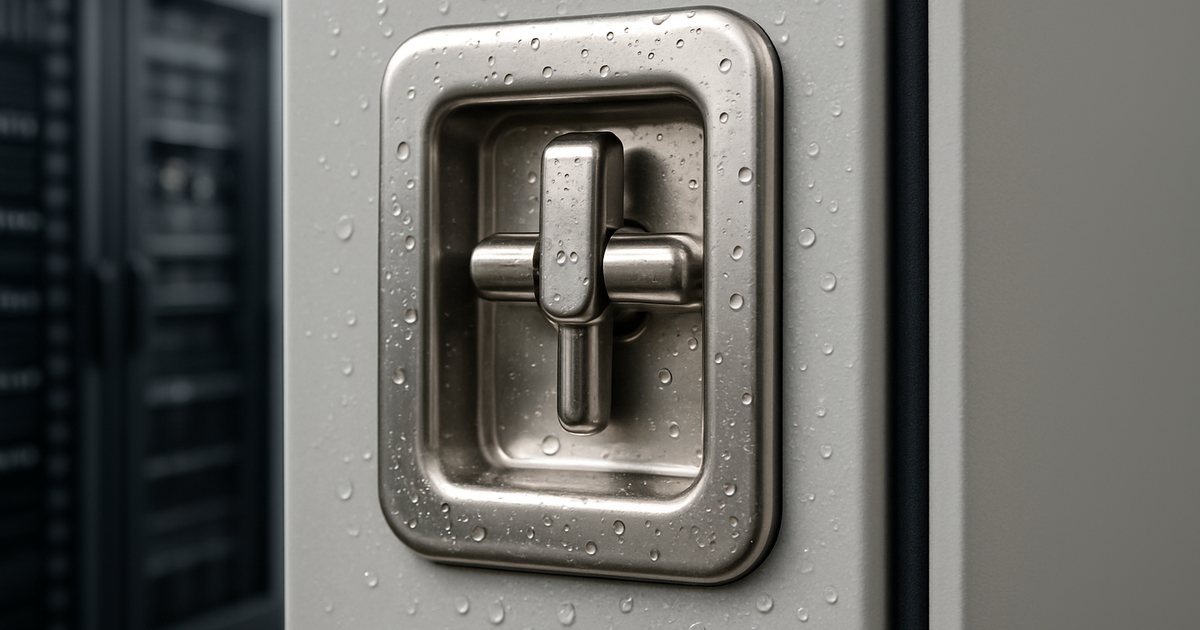
Compression Latch Applications: IP66 Guide
Which compression latch for which enclosure? Server racks, food-processing washdown, IP66 outdoor cabinets, HVAC, gensets, EV chargers & telecom. Material, stroke, IP rating & MOQ specs. Factory direct, OEM available.
Quick Answer
Sealed server / containment doors: low-profile compression, 2–3 mm stroke, flush handle. Washdown & food: 316 stainless, IP66–IP69K, silicone seal, crevice-free body. Outdoor & telecom: 304 stainless, IP66, adjustable 3–5 mm stroke. HVAC control: zinc/chrome, fixed 3–4 mm, IP65. Genset & EV: detented cam, adjustable stroke, vibration-rated. Skip to the selection matrix.
Most compression latch guides explain the mechanism and then stop. That leaves the actual engineering decision — which specific latch goes on your door — to a catalogue filter. The mechanism is the easy part. What changes from job to job is the environment, and the environment is what kills latches.
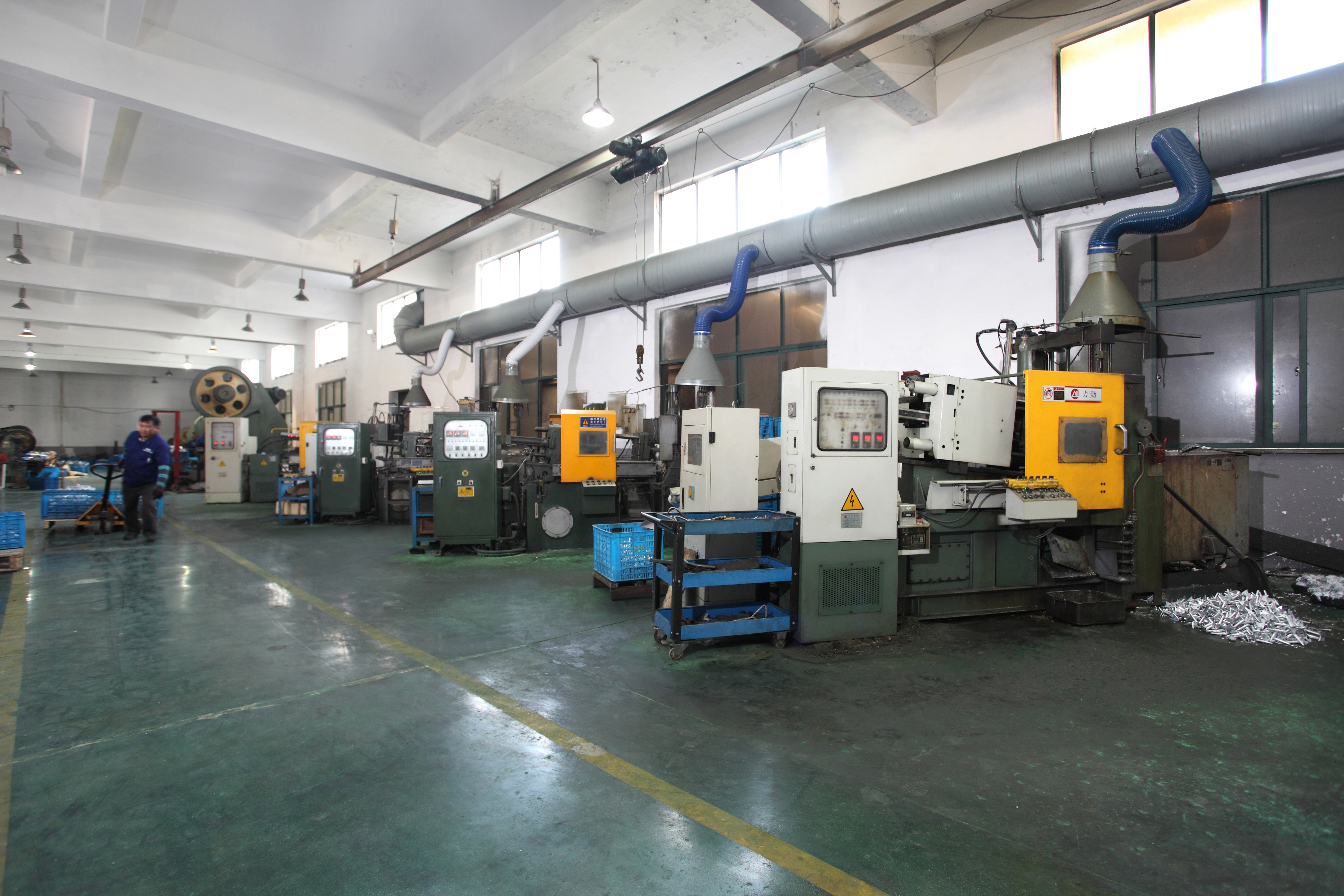
We die cast, machine and assemble enclosure hardware in Ningbo and have shipped to over 20 countries since 1988. The failures that come back to us are almost never mechanism failures. They are specification failures: zinc in a chlorinated washdown line, a fixed-stroke latch on a door whose gasket took a set, a beautiful stainless latch that could not be fitted because the cam fouled a busbar. This guide is organised the way those decisions actually get made.
If you need the mechanism fundamentals first, start with ourcomplete compression latch guide, or withcompression latch vs quarter-turn latchif you have not yet confirmed you need compression at all.
1. Four Questions That Decide the Latch
Before any catalogue is opened, four answers narrow the field to a handful of parts.
- What is the chemistry, not just the weather? “Outdoor” is not a specification. Coastal salt, dairy-plant chlorinated sanitiser, and clean inland rain are three different corrosion problems. Chlorides are what separate 304 from 316 stainless.
- How much stroke does the gasket need? Required stroke = (gasket free height × 0.30) + door-to-frame gap. A 6 mm EPDM gasket with a 1.5 mm gap needs about 3.3 mm. This one calculation eliminates most of the catalogue.
- How much depth is behind the panel? Body depth plus cam swing radius. Standard compression bodies need 28–45 mm behind panel and 22–32 mm of swing clearance.
- Who opens it, and how often? A cabinet opened daily by a technician wants a tool-less lever. One opened annually by a utility crew wants a keyed or triangular-drive cylinder that the public cannot operate.
2. Application Selection Matrix
This is the table we work from internally when a customer sends an enquiry. Prices are indicative FOB Ningbo at 1,000 pcs and move with zinc and stainless input costs.
| Application | Material | IP target | Stroke | Handle style | Indicative FOB |
|---|---|---|---|---|---|
| Sealed server rack / containment door | Zinc + chrome | IP54–IP65 | 2–3 mm (low profile) | Flush T / wing knob, keyed | $3.20–$5.50 |
| Perforated airflow rack door | Zinc + chrome | None needed | n/a — use quarter-turn | Swing handle | $1.10–$2.20 |
| Food processing / washdown | 316 stainless | IP66–IP69K | 3–5 mm adjustable | Smooth lever, hygienic | $8.50–$16.00 |
| Outdoor telecom / 5G cabinet | 304 stainless | IP66 | 3–5 mm adjustable | Fold-out T, keyed | $5.80–$11.00 |
| Rooftop HVAC control cabinet | Zinc + chrome or 304 | IP65 | 3–4 mm fixed | Fold-out T | $2.40–$6.00 |
| Genset / power pack | Zinc + chrome | IP54–IP65 | 3–5 mm, detented | Flush paddle or T | $3.60–$7.00 |
| Battery / BESS enclosure | 304 stainless | IP65–IP66 | 3–5 mm adjustable | Keyed, tamper-resistant | $6.00–$12.00 |
| EV charging cabinet | 304 stainless | IP54–IP65 | 3–5 mm, multi-point on tall doors | Keyed swing handle | $6.50–$22.00 |
| Machine / automation enclosure | Zinc + chrome | IP54–IP65 | 3–4 mm fixed | Lever or hex drive | $2.40–$5.00 |
| Medical equipment housing | 304 SS or zinc + powder coat | IP54 | 2–3 mm | Flush, smooth, cleanable | $3.80–$9.00 |
Not sure where your enclosure falls?
Send a photo of the door, the panel thickness, and the gasket cross-section. We will come back with two or three part numbers and a cutout drawing. Talk to our engineers →
3. Server Racks & Data Centre Cabinets
The first thing to establish is whether the door is sealed at all, because most rack doors are deliberately not.
Perforated airflow doors do not need compression. A door with 70–80% open area has no gasket and no sealing function. Fitting a compression latch there costs 2–3× more for zero benefit. Use a swing handle or a quarter-turn; ourserver rack lock guidecovers the security side, which is the real requirement on those doors.
Compression belongs on sealed rack doors, and there are more of these than people assume:
- Hot/cold aisle containment panels — air bypass is the entire point of containment, and an uncompressed gasket is a bypass path. Air leakage directly degrades PUE.
- Acoustic-lined cabinets in offices and labs, where the foam only attenuates when it is compressed.
- Edge and micro data centre enclosures deployed in warehouses, factory floors and telco huts — dust and humidity are real, and these often need IP54–IP65.
- Outdoor-rated modular data centre skins, which are simply outdoor cabinets and belong in section 5.
The constraint here is almost always intrusion into the aisle. Hot aisles are narrow and a protruding handle is a shin hazard and a cable-management obstruction. Specify a flush T-handle that sits at 0 mm protrusion when closed, or a low-profile wing knob. Because containment gaskets are thin closed-cell foam or brush seals, 2–3 mm of stroke is normally enough — which is fortunate, because low-profile bodies are what fit the shallow door frames used on 600 mm and 800 mm racks.
Add a keyed cylinder if the deployment is multi-tenant or subject to compliance audit. Common keying across a row plus master keying for facilities is the usual arrangement.
4. Food Processing & Washdown Enclosures
This is the most demanding environment we supply, and the one where the wrong material fails fastest — sometimes within a single season.
316 stainless, not 304, and never zinc. Food plants sanitise with chlorinated and peracetic chemistry. Chloride ions cause pitting corrosion in 304; the 2–3% molybdenum in 316 is specifically what resists it. Zinc alloy is a non-starter regardless of plating — a single plating pinhole becomes a corrosion site, and the resulting product contamination risk is not worth the $6 saved.
| Material | Neutral salt spray (ASTM B117) | Chloride pitting resistance | Washdown verdict |
|---|---|---|---|
| Zinc alloy + chrome | 72–120 hrs | Poor | Do not use |
| 304 stainless | ~500 hrs | Moderate | Acceptable for low-chloride only |
| 316 stainless | 1,000+ hrs | Good | Recommended |
Hygienic geometry matters as much as the alloy. Regulators and auditors look for crevices that harbour product residue and resist cleaning. That means: no recessed hex drives, no exposed threads, no sharp internal corners, no captive debris traps under the handle. Specify a smooth lever or a hygienic-profile T-handle with radiused transitions. Gaskets should be FDA-grade silicone or FDA EPDM, not general-purpose EPDM.
IP69K if the line uses high-pressure hot wash. IP69K testing (IEC 60529 with DIN 40050-9) applies 80–100 bar water at 80 °C from four angles — far more aggressive than IP66. Many latches marketed as “washdown” are only IP66. If your customer pressure-washes, ask for the IP69K report specifically.
Budget roughly a 2 to 2.5× premium over the zinc equivalent. Against the cost of a contamination event or a failed plant audit, it is not a close call.
5. Outdoor & Telecom Cabinets (IP66)
Outdoor roadside cabinets — telecom, 5G, traffic control, street furniture — share a profile: unattended for months, exposed to wind-driven rain and road spray, opened by a technician a few times a year, and a target for tampering.
Specify IP66, not IP65. IP65 is tested with a 6.3 mm nozzle at 12.5 L/min; IP66 uses a 12.5 mm nozzle at 100 L/min. Wind-driven rain against a roadside cabinet behaves much more like the IP66 test. The cost delta between the two is typically 15–25%, and the field failure delta is far larger. OurIP65/IP66/IP67 guide covers the test methods in detail.
Specify adjustable stroke. This is the application where adjustability pays for itself. Outdoor cabinets see 40–60 °C annual temperature swings, and EPDM gaskets take a compression set over years of thermal cycling. A fixed-stroke latch that sealed perfectly at commissioning may be sitting at 20% compression after four years, and 20% does not seal. An adjustable latch lets a technician restore the seal in 30 seconds during a routine visit, rather than triggering a truck roll for a water-damaged cabinet.
304 stainless for general outdoor, 316 within about 5 km of coast. Salt aerosol carries inland further than most specifiers expect.
Tamper resistance: triangular, square or double-bit drives are the utility standard because the tools are not sold in hardware shops. A keyed cylinder is better where access needs to be auditable. Either way, avoid a bare wing knob on a public-accessible cabinet.
One cold-weather note our northern-European customers taught us: below −10 °C, EPDM stiffens significantly and closing torque rises — enough that technicians in gloves struggle with a latch that felt fine in a workshop at 20 °C. Silicone gaskets stay flexible to about −50 °C and are worth the upgrade for Nordic, Canadian and high-altitude deployments.
6. HVAC & Automation Control Cabinets
Rooftop HVAC control cabinets and factory-floor automation panels are the volume application, and they are the one place where the cheap answer is often the right answer.
These enclosures are typically built in production runs by a single fabricator with controlled sheet metal tolerance. Panel thickness does not vary, gasket supply is consistent, and doors are moderate in size. That is exactly the condition where fixed-stroke compression is correct: 3–4 mm, zinc alloy with chrome plating, IP65. You get repeatable sealing without paying for adjustability you will never use, at roughly $2.40–$4.80 FOB.
Move up to 304 stainless when the unit is rooftop-mounted in a coastal or industrial-chemical atmosphere. Move up to adjustable when you source sheet metal from more than one supplier — mixed tolerance bands are the classic reason a fixed-stroke fleet seals inconsistently.
Two practical notes for control cabinets specifically. First, these doors are opened by maintenance technicians who are frequently holding a meter or a laptop, so aone-handed lever beats a two-handed knob. Second, arc-flash and lockout procedures may require a padlock hasp on the latch — checkelectrical panel lock compliancebefore finalising the handle style, because retrofitting a hasp is painful.
7. Gensets, Battery & EV Charging Enclosures
Generator sets
On a genset the design driver is vibration, not water. A running set puts continuous structural vibration into the enclosure skin. A quarter-turn with no preload develops rattle, the cam and frame return wear each other, and clearance grows until the latch can walk out of engagement.
Specify a detented cam so the handle has a positive locked position, an adjustable 3–5 mm stroke, and thread-locking on the mounting hardware. On sound-attenuated enclosures there is a second reason for compression: the acoustic gasket only delivers its rated insertion loss when it is actually compressed. An uncompressed acoustic seal is a noise leak, and on a spec'd-dB installation that is a compliance failure, not a comfort issue.
Battery energy storage
BESS enclosures combine outdoor exposure with a genuine safety case. Specify 304 stainless at IP65–IP66, adjustable stroke, and a keyed or tool-required drive — unauthorised access to a battery string is a serious hazard. Where thermal runaway venting is part of the design, confirm with your enclosure engineer that the latch retention is compatible with the intended pressure relief path; some designs require the door to release above a threshold rather than hold.
EV charging cabinets
Public-sited EV charging cabinets face outdoor weather, road salt spray, and a high tamper exposure that most industrial enclosures never see. Doors are typically tall — often well over 600 mm — which pushes you toward a multi-point rod systemdriven by a single keyed swing handle, so the gasket is compressed at top and bottom as well as at the handle. A single centre latch on a 1200 mm door lets the corners bow outward and the seal fails at exactly the extremes where rain runs down. We cover this inEV charger and battery enclosure securityand in the multi-point rod latch guide.
8. Machine Enclosures & Medical Equipment
Machine and automation enclosures are usually indoor, so the enemy is coolant mist, metal chips and swarf rather than rain. IP54–IP65 with a fixed 3–4 mm stroke in zinc alloy handles this well. The one thing to check is coolant chemistry: some synthetic cutting fluids are alkaline enough to attack chrome plating over time, in which case move to stainless or a powder-coated body.
Medical equipment housings have a different priority list. Sealing is often modest (IP54 is common), but the surface has to survive repeated wipe-down with isopropyl alcohol and quaternary ammonium disinfectants without crazing, and the geometry has to be cleanable — smooth, flush, no crevices. Aesthetics genuinely matter here in a way they do not on a genset: the latch is visible to clinicians and patients. We typically supply 304 stainless or zinc with a medical-grade powder coat, in flush profiles.
9. When Depth Is the Constraint
Depth is the reason compression latches get designed out of projects, usually at first-article stage when it is expensive. Here is the escalation ladder when space is tight:
| Behind-panel space available | Option | Stroke you get | Trade-off |
|---|---|---|---|
| 45 mm+ | Standard compression, any type | 3–8 mm | None |
| 28–45 mm | Standard single-point compression | 3–5 mm | Check cam swing radius carefully |
| 22–28 mm | Low-profile compression | 2–3 mm | Thin, soft gaskets only |
| 18–22 mm | Compression paddle latch, shallow body | 1.5–2.5 mm | Larger cutout footprint |
| Under 18 mm | Quarter-turn + redesign the seal | 0 mm | Move sealing to a frame-mounted seal or a deeper frame return |
Two things to remember. First, always dimension for cam swing radius (20–32 mm), not just body depth — the cam sweeps an arc through 90°, and busbars, DIN rail ends and fan shrouds have to clear the whole path, not the parked position. Second, if you land in the bottom row, the answer is usually to change the door frame rather than to accept a leaking enclosure. A deeper frame return costs one tooling change; a fleet of cabinets that fails its IP test costs far more.
10. MOQ, Lead Time & Standardising Across Product Lines
Commercial terms as we quote them:
| Item | MOQ | Sample lead time | Production lead time |
|---|---|---|---|
| Catalogue latch, standard finish | 500 pcs | ~7 days from stock | 25–30 days |
| Custom cam length or keying | 2,000 pcs | 10–15 days | 30–35 days |
| 316 stainless, machined | 1,000 pcs | 12–18 days | 30–40 days |
| Fully custom body (new die tool) | 3,000 pcs | 30–45 days (tooling) | +25–30 days after T1 |
The single highest-leverage thing an OEM can do is standardise on one cutout across the product range. Most of our long-term customers use one latch body and one cutout for their entire enclosure family, then vary only two things: cam length for different panel thicknesses, and material or finish for different environments. The benefits compound — one punch tool in the sheet metal cell, one first-article approval, one part to stock for service, and purchase volume consolidated into a better price break instead of scattered across five part numbers below MOQ.
The sensible exception is washdown. The 316 stainless hygienic version is different enough in geometry and cost that it earns its own part number.
We are IATF 16949 and ISO 9001 certified, with in-house die casting, stamping, CNC machining and surface treatment, so cam length and finish changes stay inside one factory rather than crossing a supply chain. If you are evaluating suppliers, ourguide to sourcing industrial hardware from China sets out what to audit.
11. FAQ
Which compression latch is best for server rack doors?
For perforated airflow doors you do not need compression at all — a swing handle or quarter-turn is correct, because there is no gasket to squeeze. Compression latches belong on sealed rack doors: hot/cold aisle containment panels, acoustic-lined cabinets, and edge or micro data centre enclosures deployed outside a conditioned room. For those, specify a low-profile compression latch with 2–3 mm stroke, a flush T-handle or wing knob so it does not intrude into the aisle, and a keyed cylinder for cabinet-level access control.
What compression latch should I use for washdown and food processing equipment?
Use 316 stainless steel with a smooth, crevice-free body and a silicone or FDA-grade EPDM gasket, rated IP66 as a minimum and IP69K if the plant uses high-pressure hot wash (80 °C, 80–100 bar per IEC 60529 and DIN 40050-9). Avoid zinc alloy: chlorinated sanitisers attack the plating and expose the substrate. Avoid recessed hex drives that trap product — specify a smooth lever or a hygienic-design T-handle. Expect roughly a 2 to 2.5 times price premium over the zinc equivalent.
What IP rating do I need for an outdoor cabinet compression latch?
IP65 is the practical minimum for any enclosure that sees direct rain. Specify IP66 for exposed sites with wind-driven rain, roadside spray, or periodic pressure washing — this covers most telecom, EV charging and roadside cabinets. Go to IP67 only where temporary flooding is credible, such as ground-level pedestals in flood-prone areas. Critically, the latch must be rated with your panel thickness and your gasket installed, not as a bare component.
Do genset enclosures need compression latches?
Yes, but usually for vibration rather than water. A generator set enclosure runs continuous structural vibration, and a plain quarter-turn with no preload will develop rattle and can eventually walk out of engagement. A compression latch preloads the door against its gasket, and the gasket acts as a spring that holds the cam seated. Specify a detented cam, an adjustable stroke of 3–5 mm, and thread-locked fasteners. The acoustic gasket on a sound-attenuated enclosure also only performs when it is actually compressed.
What is the minimum installation depth available for compression latches?
Standard single-point compression latches need 28–45 mm behind the panel. Low-profile models reach roughly 22–28 mm, at the cost of reduced stroke — typically 2–3 mm instead of 3–8 mm, which restricts you to thin, soft gaskets. Below about 22 mm you should move to a compression paddle latch with a shallow body, or accept a quarter-turn and seal the door another way. Always add cam swing radius (20–32 mm) to your clearance calculation, not just body depth.
Can one compression latch model cover multiple product lines?
Usually yes, and it is worth engineering for. Most of our OEM customers standardise on one body and one cutout across their range, then vary only the cam length for different panel thicknesses and the finish or material for different environments. That keeps a single cutout punch in the sheet metal cell and consolidates purchase volume into one price break. The exception is washdown, where 316 stainless and hygienic geometry usually justify a separate part number.
What is the MOQ and lead time for custom compression latches?
Our MOQ is 500 pcs for catalogue items with a standard finish, and 2,000 pcs for a custom cam length, custom keying or a bespoke handle. Samples ship in about 7 days from stock, production lead time is 25–35 days depending on finish and whether stainless machining is involved. New die tooling for a fully custom body runs roughly 30–45 days and is quoted separately; we retain and maintain the tool for the customer.
Related Guides
Compression Latches: Complete Guide
Types, IP ratings, gasket compression force, materials
Compression vs Quarter-Turn Latch
Stroke, install depth, vibration and real cost compared
Waterproof Enclosure Locks
IP65 vs IP66 vs IP67 selection and testing
NEMA Enclosure Types Guide
NEMA 1 through 6P ratings explained
Paddle Latch Guide
Flush-mount types, sizing chart & keying options
Compression Latch Manufacturer — OEM & Factory Direct
Browse 33 models with selection guide, IP ratings, MOQ & pricing
Get the Right Latch for Your Application
35+ years manufacturing compression latches in Ningbo. Zinc, 304 and 316 stainless, fixed or adjustable stroke, IP65–IP69K options, IATF 16949 and ISO 9001 certified. MOQ 500 pcs, samples in 7 days.