
Selection Guide
IP66 Compression Latches for Outdoor Use
How to select IP66 compression latches for outdoor cabinets: gasket materials, NEMA 4X equivalence, stainless steel grades, UV resistance & salt spray test data. 33 models, factory direct. Free samples available →
Quick Answer
For IP66 outdoor enclosures, specify 304 or 316 stainless steel compression latches with EPDM gaskets targeting 20–25% compression. Space latches every 150–200mm around the door perimeter with mandatory corner positions. IP66 = NEMA 4 equivalent; for corrosion resistance add NEMA 4X which requires stainless steel. UV-stable powder coating or bare stainless finish for 10+ year outdoor life. Skip to the application matrix or recommended models.
1. Why IP66 Matters for Outdoor Enclosures
Outdoor electrical cabinets, telecom shelters, EV charging stations, and industrial control panels face relentless environmental assault: driving rain, dust storms, temperature extremes, UV radiation, and sometimes deliberate water jets during maintenance cleaning. IP66 is the minimum viable protection level for most outdoor enclosure applications.
The "66" in IP66 means two things: the first 6 indicates complete dust-tightness (no dust ingress under negative pressure), and the second 6 means protection against powerful water jets(100 liters/min at 100 kPa from 3 meters, any direction). This is significantly more demanding than IP65, which only protects against low-pressure water jets.
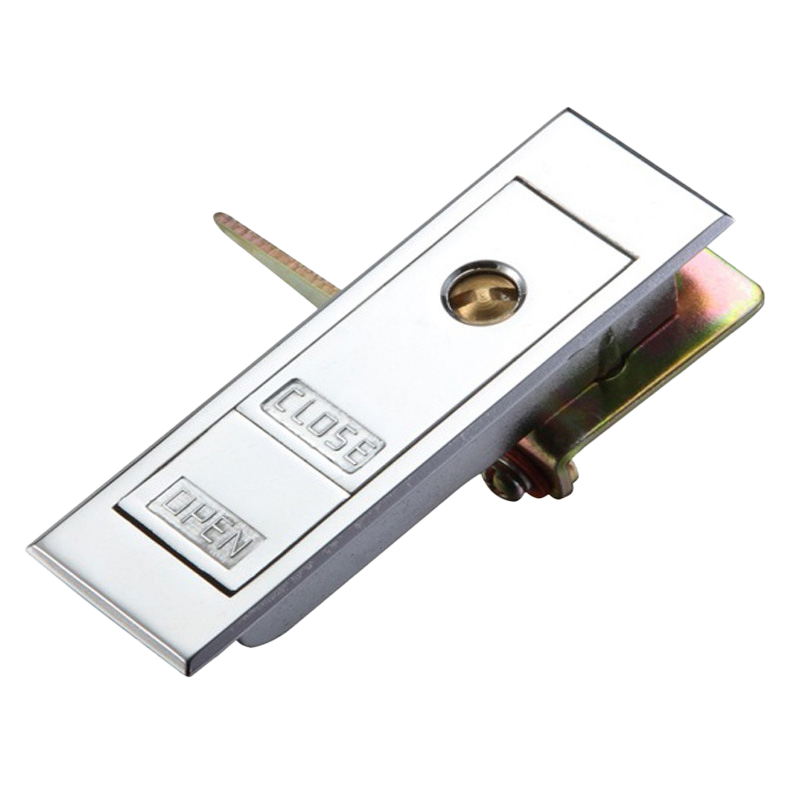
The compression latch is the critical hardware component that makes IP66 achievable. A well-designed enclosure with poor latches will fail IP testing every time — the latch determines whether the gasket is compressed uniformly enough to maintain the seal under pressure. As a manufacturer with 35+ years producingcompression latches for IP66 and IP67 applications, we see the same failure patterns repeatedly: wrong gasket material, insufficient compression force, and improper latch spacing.
2. IP66 vs IP65 vs IP67: Which Rating Do You Need?
Choosing between IP65, IP66, and IP67 determines your latch specification, gasket selection, and total hardware cost. Here is a direct comparison from the enclosure hardware perspective:
| Rating | Dust | Water | Gasket Compression | Latch Spacing | Typical Applications |
|---|---|---|---|---|---|
| IP65 | Dust-tight | Low-pressure jets | 15–20% | 250–300 mm | Sheltered outdoor, indoor industrial |
| IP66 | Dust-tight | Powerful jets (100 L/min) | 20–25% | 150–200 mm | Outdoor cabinets, EV chargers, telecom |
| IP67 | Dust-tight | Temporary immersion (1m/30min) | 25–30% | 100–150 mm | Underground, flood zones, marine |
The bottom line: IP65 is adequate for indoor industrial and sheltered outdoor installations. IP66 is the standard for exposed outdoor enclosures — telecom cabinets, EV charging stations, roadside electrical cabinets. IP67 is reserved for flood-prone, underground, or marine installations. For most outdoor applications, IP66 is the sweet spot between cost and protection.
For a comprehensive overview of all IP ratings and their latch requirements, see ourcompression latch guide.
3. NEMA 4X Equivalence & Compliance
In North America, enclosure ratings follow the NEMA (National Electrical Manufacturers Association) system rather than IP codes. The key NEMA ratings for outdoor enclosures are:
- NEMA 4 — Watertight, equivalent to IP66. Protects against windblown dust, rain, sleet, and external ice formation.
- NEMA 4X — NEMA 4 plus corrosion resistance. This is the critical difference: NEMA 4X requires that all external hardware, including compression latches, resist corrosion. In practice, this means 304 or 316 stainless steel latches.
- NEMA 3R — Rain-tight, much lower protection level (roughly IP14). Adequate for meter bases and junction boxes with overhang protection.
An enclosure claiming NEMA 4X with zinc alloy latches is non-compliant. The zinc will corrode in coastal and industrial atmospheres, eventually compromising the seal. Always specify stainless steel compression latches for NEMA 4X enclosures. Read our NEMA enclosure types guidefor the complete NEMA rating breakdown.
4. Gasket Materials for IP66 Outdoor Sealing
The gasket is where the seal actually happens. The compression latch provides the force; the gasket provides the barrier. Choosing the wrong gasket material is the most common cause of IP66 test failure.
| Gasket Material | Temperature Range | UV Resistance | Compression Set (%) | Best For |
|---|---|---|---|---|
| EPDM | −40°C to +120°C | Excellent | 10–25% | General outdoor, telecom, EV charging |
| Silicone | −60°C to +200°C | Excellent | 15–35% | Wide temperature swings, food processing |
| Neoprene (CR) | −30°C to +100°C | Good | 15–30% | Oil/chemical exposure, industrial |
| Viton (FKM) | −20°C to +200°C | Good | 10–20% | Chemical plants, high-temperature |
| PU Foam | −20°C to +80°C | Poor | 20–40% | Indoor only, not recommended for IP66 |
For IP66 outdoor enclosures, EPDM is the default recommendation. It offers the best combination of UV stability, ozone resistance, low compression set, and cost-effectiveness. EPDM gaskets maintain their elasticity and sealing performance for 10+ years in direct outdoor exposure — a critical requirement for infrastructure cabinets that may not be serviced for years after installation.
Gasket compression target for IP66: Aim for 20–25% compression of the gasket's free height. A 6mm EPDM gasket should be compressed to approximately 4.5–4.8mm when the latch is fully engaged. Under-compression (less than 15%) will fail IP66 water jet testing. Over-compression (more than 35%) accelerates gasket fatigue and may cause permanent deformation within 1–2 years.
5. Stainless Steel vs Zinc Alloy: Material Selection for IP66
Both zinc alloy and stainless steel compression latches can achieve IP66 sealing performance — the sealing is done by the gasket, not the latch body material. However, the durability of the latch in outdoor environments is entirely dependent on material selection.
| Property | Zinc Alloy (Zamak 5) | 304 Stainless Steel | 316 Stainless Steel |
|---|---|---|---|
| Salt spray life (ASTM B117) | 96–200 hrs (with plating) | 500+ hrs | 1,500+ hrs |
| UV resistance | Requires powder coating | Native | Native |
| Temperature range | −40°C to +120°C | −196°C to +870°C | −196°C to +870°C |
| NEMA 4X compliant | No | Yes | Yes |
| Coastal / marine | Not recommended | Marginal | Excellent |
| Cost index | 1x | 2.5–3x | 3.5–4.5x |
| Best outdoor use | Sheltered, canopy-covered | General outdoor, inland | Coastal, marine, chemical |
Selection rule of thumb: If the enclosure will be exposed to rain, use at minimum 304 stainless steel. If it will be within 5km of the coast or in an industrial atmosphere (chemical plants, refineries), specify 316 stainless steel. Zinc alloy is only appropriate for IP66 outdoor enclosures when the latch is sheltered from direct weather exposure.
For detailed material comparisons, see our zinc alloy vs stainless steel guide.
6. UV, Salt Spray & Temperature Considerations
UV Degradation
Outdoor compression latches are exposed to UV radiation year-round. Unprotected zinc alloy with chrome plating will show visible corrosion within 2–3 years in direct sunlight environments (the UV degrades the chrome layer, exposing the zinc to oxidation). Stainless steel is inherently UV-stable. If using zinc alloy outdoors, specify UV-stabilized polyester powder coating (minimum 60-micron thickness) over the chrome plating for additional UV protection.
Salt Spray Resistance
ASTM B117 salt spray testing is the industry standard for corrosion resistance. For outdoor enclosures in coastal environments, the minimum requirement is 500 hours of salt spray with no red rust (white corrosion on zinc may be acceptable for inland applications but not coastal). Hengchieh's 316 stainless steel compression latches achieve 1,500+ hours of salt spray testing with no corrosion — this is verified by third-party test reports provided with every shipment.
Temperature Cycling
Outdoor enclosures in continental climates can experience temperature swings from −40°C in winter to +60°C on sun-heated surfaces in summer. This thermal cycling causes differential expansion between the latch body, gasket, and enclosure panel. Compression latches with adjustable compression (threaded cam body) allow you to re-adjust the compression force after the first seasonal cycle to compensate for any gasket settling. Fixed-cam latches provide no adjustment — the initial installation must account for thermal expansion tolerances.
7. Application-Specific IP66 Compression Latch Selection
| Outdoor Application | Material | Gasket | Locking | Special Requirements |
|---|---|---|---|---|
| Telecom outdoor cabinet | 304 SS (316 coastal) | EPDM | Keyed-alike master | Anti-vandal, tamper-resistant driver |
| EV charging station | 316 SS | EPDM | Key-locking + padlock | Multi-point for tall doors, UL 2594 |
| Roadside electrical cabinet | 304 SS | EPDM | Utility key (triangle/square) | Vandal-resistant, low profile |
| Solar inverter enclosure | 304 SS | Silicone | Tool-operated | High-temp interior (>60°C) |
| Water treatment panel | 316 SS | Viton | Padlock-ready | Chemical resistance, chlorine |
| Outdoor BESS (battery) | 316 SS | EPDM | Multi-point rod | Thermal release, NFPA 855, fire-rated |
For EV-specific lock requirements, see our EV charging cabinet lock guide.
8. Installation Spacing & Compression Force Calculations
IP66 demands tighter latch spacing than IP65 because the water jet test pressure is significantly higher (100 kPa vs 30 kPa). Any gap in gasket compression becomes a leak path under high-pressure water jets.
Recommended Spacing for IP66
- Straight runs: One compression latch every 150–200mm along the door perimeter.
- Corners: Mandatory latch position at each corner, within 50mm of the corner radius. Corners are the #1 leak point in IP66 enclosures.
- Large doors (1200mm+ height): Consider rod control locks or multi-point rod latches instead of individual compression latches. A single rod mechanism distributes compression force evenly along the entire door height.
Force Calculation Example
For a 600mm × 800mm enclosure door with a 6mm EPDM gasket (Shore A 50), targeting IP66:
- Gasket perimeter: (600 + 800) × 2 = 2,800mm = 280cm
- Required force: 5 N/cm (mid-range for EPDM) × 280cm = 1,400 N total
- Number of latches at 175mm spacing: 2,800mm / 175mm = 16 latch points, but rounded to include all 4 corners = approximately 8 latches for a door this size
- Force per latch: 1,400 N / 8 = 175 N per latch (well within the 200–500 N range of standard quarter-turn compression latches)
- Safety factor: ×1.5 = 263 N per latch — specify latches rated for 300+ N compression
9. Recommended Hengchieh Models for IP66 Outdoor Enclosures
Based on our experience supplying compression latches to outdoor enclosure OEMs across telecom, EV charging, and utility markets, these are our most popular IP66-capable models:
| Model | Type | Material | Key Lock | Best For |
|---|---|---|---|---|
| MS713 | Flush quarter-turn | Zinc alloy | Yes | Sheltered outdoor cabinets |
| MS726 | Button lever, key-locking | Zinc alloy + brass | Yes | EV charging cabinets, utility |
| MS728 | Flush quarter-turn | Zinc alloy | No | Machine enclosures, food processing |
View all 33 compression latch models → · MOQ: 500 pcs · Lead time: 15–25 days · Free samples available
10. Frequently Asked Questions
What does IP66 mean for a compression latch?
Is IP66 the same as NEMA 4X?
What gasket material is best for IP66 outdoor compression latches?
Can zinc alloy compression latches achieve IP66?
How many compression latches do I need for IP66?
Related Guides
Compression Latches: Complete Guide
Types, gasket force data, sizing & 33 models
Paddle Latch Guide
Flush handles for cabinets & enclosures
Waterproof Enclosure Locks (IP65/IP67)
Complete guide to IP-rated locks
EV Charging Cabinet Lock Guide
Multi-point latches for BESS & EV chargers
NEMA Enclosure Types Guide
NEMA 1 through 4X ratings explained
Compression Latch Manufacturer — OEM & Factory Direct
33 models, selection guide, MOQ & pricing
Need IP66 Compression Latches?
35+ years of precision manufacturing. 304/316 stainless steel, EPDM gaskets, NEMA 4X compliant. Custom key systems available.