
Buyer’s Guide
Cam Lock vs Cabinet Locks: Types Compared
Compare cam locks, compression latches, paddle latches, rod locks & electronic locks — security ratings, keying systems (keyed alike, master key), NEMA compatibility, and price ranges. Industrial lock selection guide from a manufacturer with 75+ cam lock models.
Quick Answer
Cam locks are the simplest and cheapest cabinet lock ($0.50–$5.00) — they rotate a tongue to hold a door closed. But they offer no gasket compression and low security. For sealed enclosures (IP65+), use compression latches. For high-security applications, use rod control locks with multi-point engagement. For budget access control on non-sealed cabinets, cam locks are the right choice. Skip to the comparison table.
1. What Is a Cam Lock? How It Actually Works
A cam lock is a cylindrical locking device consisting of three parts: a cylinder body (the barrel that passes through the panel), a key mechanism (wafer, pin tumbler, or tubular), and a cam (the metal tongue that rotates to lock/unlock).
When you insert the key and turn it 90° or 180°, the cam rotates behind the panel to engage a strike plate, frame lip, or receiver. That’s it — no compression, no clamping, no multi-point engagement. The cam simply blocks the door from swinging open.
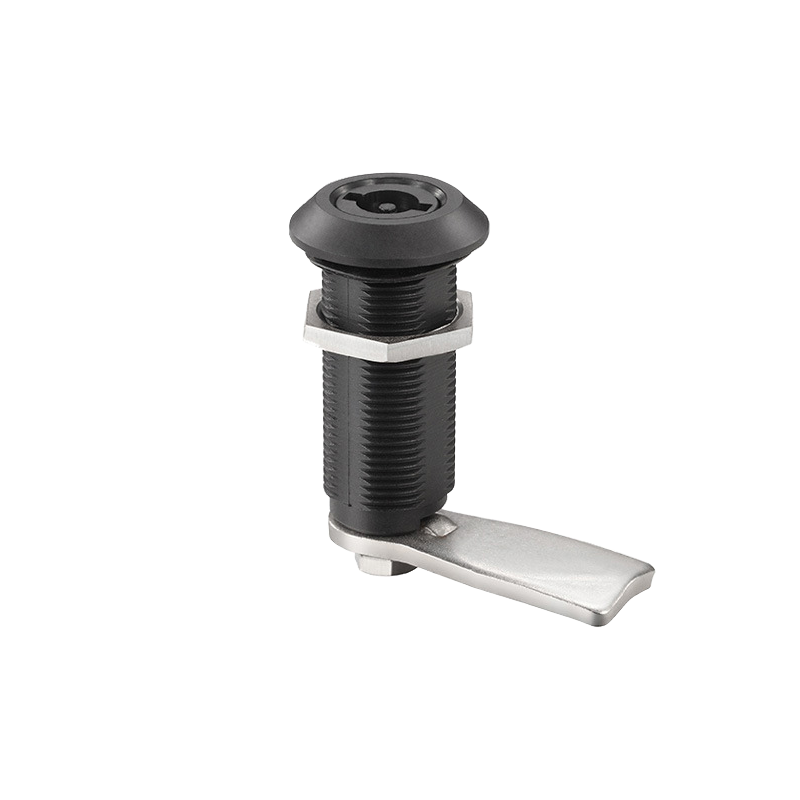
This simplicity is the cam lock’s greatest strength and its biggest limitation. Installation requires just one drilled hole (16–22 mm diameter). But the single-point engagement means the lock can be overcome with moderate prying force, and the panel penetration breaks any gasket seal.
Hengchieh manufactures 75 cam lock models in zinc alloy and stainless steel, covering wafer, pin tumbler, tubular, and tool-operated mechanisms.
2. 6 Types of Cabinet Locks Explained
Before we compare, let’s define each lock type you’ll encounter when specifying industrial cabinet hardware:
Type 1: Cam Locks (Cylinder Locks)
Single-point rotating tongue. Simplest mechanism. Available in key-operated, tool-operated (requires screwdriver or hex key), and thumb-turn (keyless) variants. Ideal for low-security access control on utility cabinets, mailboxes, vending machines, and server rack side panels.
- Security level: Low to medium
- Sealing capability: None
- Price range: $0.50–$5.00 per unit (FOB)
Type 2: Compression Latches (Plane Locks)
Quarter-turn or lever-operated locks that pull the door inward as they engage, compressing a gasket between door and frame. This is the critical difference from cam locks — compression latches create an environmental seal while locking.
- Security level: Medium
- Sealing capability: IP54–IP67 (with proper gasket)
- Price range: $2.00–$12.00 per unit
Read our full compression latch guide for gasket force calculations and IP rating details.
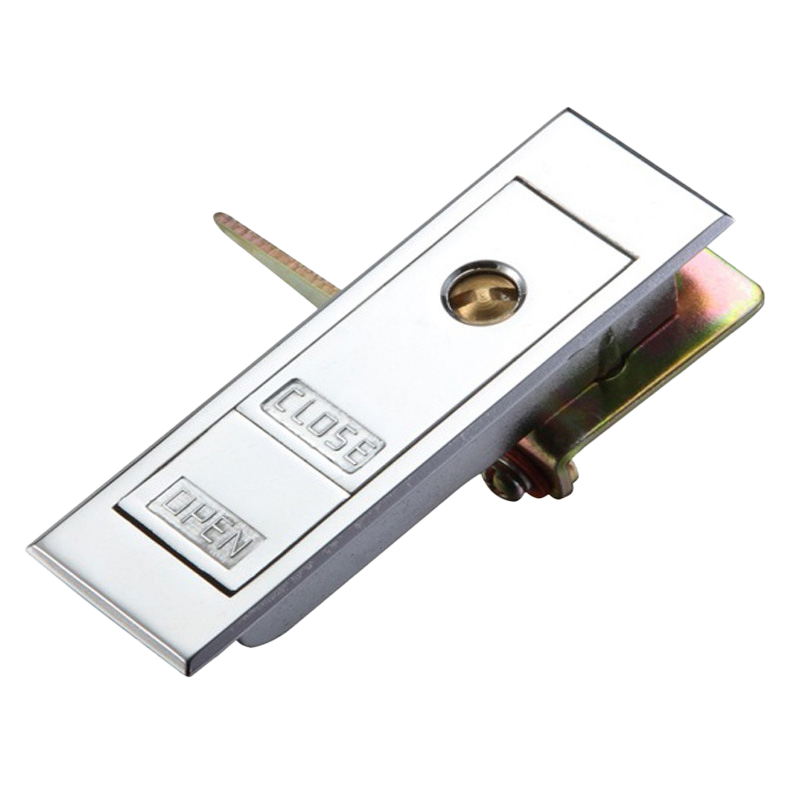
Type 3: Paddle Latches (Panel Locks)
Recessed paddle-operated locks that sit flush in the panel. The paddle folds flat when closed, eliminating protrusions. Often called T-handle latches when they include a folding T-handle for leverage. Common on trucks, RVs, toolboxes, and outdoor enclosures.
- Security level: Medium
- Sealing capability: Moderate (flush mounting reduces water entry points)
- Price range: $3.00–$15.00 per unit
See our paddle latch guide and T-handle lock guide for specifications.
Not sure which lock type you need?
Tell us your cabinet type, environment, and security requirements — our engineers will recommend the right lock and send a quote within 24 hours.
Get a RecommendationType 4: Rod Control Locks (Multi-Point Locks)
Rod control locks use a central handle mechanism that drives rods vertically through the door, engaging at the top and bottom of the frame simultaneously. This multi-point engagement makes the door nearly impossible to pry open — the highest mechanical security for cabinet doors.
- Security level: High
- Sealing capability: Good (even pressure distribution aids gasket compression)
- Price range: $8.00–$35.00 per set
Type 5: Swing Handle Locks
Ergonomic handles that fold flat against the panel when closed and swing out for gripping. They typically connect to a 3-point rod locking system. Popular for server cabinets, large electrical panels, and any enclosure where an operator needs a comfortable grip to open a heavy door.
- Security level: Medium to high
- Sealing capability: Good (with rod system providing even door compression)
- Price range: $5.00–$25.00 per unit
Type 6: Electronic / Smart Locks
RFID, keypad, Bluetooth, or biometric locks with audit trail logging. No physical key required. Used in data centers, pharmaceutical storage, and critical infrastructure where access control must be logged, time-limited, or remotely managed.
- Security level: High to very high
- Sealing capability: Varies (depends on mechanical integration)
- Price range: $25.00–$200+ per unit
3. Cam Lock vs Compression Latch vs Paddle Latch vs Rod Lock
Here’s the head-to-head comparison that matters for procurement decisions:
| Feature | Cam Lock | Compression Latch | Paddle Latch | Rod Control Lock |
|---|---|---|---|---|
| Locking Points | 1 (cam tongue) | 1 (compression cam) | 1–2 (paddle + optional rod) | 3+ (center + rods top/bottom) |
| Gasket Compression | None | Yes (3–7 N/cm) | Minimal | Even distribution |
| IP/NEMA Rating | Not suitable | IP54–IP67 | IP44 max | IP65 (with gasket) |
| Security Rating | Low | Medium | Medium | High |
| Pry Resistance | Low (single point) | Medium | Medium | High (multi-point) |
| Installation | 1 hole, 2 min | 1 cutout, 5 min | 1 cutout, 5–10 min | Multiple holes, 15–30 min |
| Price (FOB) | $0.50–$5 | $2–$12 | $3–$15 | $8–$35 |
| Best For | Utility cabinets, drawers | IP65 enclosures | Toolboxes, trucks, RVs | Server racks, critical infra |
Prices FOB China, MOQ 500+. Green highlights indicate the leading option for that criterion. Data from Hengchieh production catalog, 2026.
4. Security Level Comparison
Security isn’t just about the lock mechanism — it’s about the entire system: lock + panel gauge + frame construction + installation quality. But here’s how the lock mechanisms themselves rank:
| Lock Type | Pick Resistance | Pry Resistance | Tamper Evidence | Security Rating |
|---|---|---|---|---|
| Cam Lock (wafer) | Low (<30 sec) | Low | None | 1/5 |
| Cam Lock (tubular) | Medium (7-pin) | Low | None | 2/5 |
| Compression Latch (keyed) | Medium | Medium | None | 2.5/5 |
| Paddle Latch (keyed) | Medium | Medium | Low | 3/5 |
| Swing Handle + Rod Lock | Medium–High | High | Medium | 4/5 |
| Electronic Lock (RFID/keypad) | N/A (no keyway) | Medium–High | High (audit trail) | 5/5 |
Security ratings are relative within industrial cabinet hardware. For critical infrastructure (data centers, substations), electronic locks with rod control mechanisms offer the best combination of mechanical + digital security.
Manufacturer insight: We see many customers specify cam locks for data center server racks because they’re familiar and cheap. That’s a mistake. A server rack storing customer data worth millions should use at minimum a swing handle lock with rod control, or ideally an electronic lock with audit logging. The $30 difference per cabinet is negligible compared to the liability.
5. Keying Systems: Keyed Alike, Master Key & More
Keying is often overlooked during specification but becomes a major operational headache later. Here are the four keying systems available for cam locks and other cabinet locks:
Keyed Alike (KA)
All locks in the order open with the same key. Most popular for industrial installations where one technician services multiple cabinets. A field service team with 50 outdoor telecom cabinets needs keyed-alike locks — carrying 50 different keys is impractical.
- Pros: One key for all cabinets; simple key management
- Cons: Anyone with the key accesses everything; lost key compromises all cabinets
- Typical use: Telecom, utility infrastructure, vending routes, building maintenance
Keyed Different (KD)
Every lock has a unique key. Standard for applications where access must be restricted to specific individuals or each cabinet contains different client data/assets.
- Pros: Maximum individual access control
- Cons: Large key bunches; difficult to manage at scale
- Typical use: Personal lockers, individual storage, high-security compartments
Master Keyed (MK)
Each lock has its own unique key, plus a master key that opens all locks. Supervisors carry the master; individual users carry their specific key. This is the best of both worlds for multi-tenant or multi-department installations.
- Pros: Individual access + supervisor override; best for organizations
- Cons: Slightly more expensive; master key is a single point of failure
- Typical use: Office buildings, data centers, multi-tenant equipment rooms
Tool-Operated (No Key)
The lock opens with a standard tool (flat screwdriver, hex key, triangle key, or proprietary key wrench) rather than a unique key. This provides convenience without the key management burden.
- Pros: No keys to lose; any technician with the right tool can access
- Cons: Very low security; anyone with a screwdriver can open a flathead-operated lock
- Typical use: Electrical panels (utility company standard triangular key), HVAC equipment

6. Cam Lock Sizing & Specification Guide
If you’ve decided a cam lock is the right choice, here’s how to specify the correct one:
Step 1: Measure Panel Thickness
The cam lock body length must pass through the panel and leave enough thread for the mounting nut. Measure your panel thickness and add 3–5 mm for the nut.
Step 2: Choose Body Diameter
| Body Diameter | Drill Size | Typical Application |
|---|---|---|
| 12 mm | 12.5 mm | Small drawers, mailboxes |
| 16 mm | 16.5 mm | Furniture, small cabinets |
| 19 mm | 19.5 mm | Standard industrial cabinets (most common) |
| 22 mm | 22.5 mm | Heavy-duty, server racks |
Step 3: Select Cam Shape & Length
The cam (metal tongue) determines the locking engagement behind the panel. Standard cam lengths range from 15–35 mm. Common shapes: straight (most common), offset (for reaching around obstacles), and hook (for engaging a keeper bar).
Step 4: Specify Material & Finish
Indoor: zinc alloy with chrome or nickel plating. Outdoor: 304 stainless steel or zinc alloy with powder coating. Marine: 316 stainless steel. See our zinc alloy vs stainless steel comparison for detailed material guidance.
7. Application Matrix: Which Lock for Which Cabinet
| Cabinet Type | Recommended Lock | Why | Keying |
|---|---|---|---|
| Server Rack / Data Center | Swing handle + rod lock | Multi-point security, audit compliance | Master keyed |
| Outdoor Electrical Enclosure | Compression latch (plane lock) | IP65 sealing required | Keyed alike |
| Indoor Electrical Panel | Quarter-turn cam lock | Quick access, no sealing needed | Tool-operated |
| Vending / Kiosk | Tubular cam lock | Better pick resistance than wafer | Keyed different |
| Truck / RV Storage | Paddle latch | Flush mount, vibration resistant | Keyed alike |
| Telecom Cabinet (Outdoor) | Compression latch + rod lock | IP65 + high security | Master keyed |
| Transformer Substation | Rod lock with padlock provision | Utility standard, multi-user access | Padlock hasp |
| Office File Cabinet | Standard cam lock | Low cost, adequate security | Keyed different |
8. Frequently Asked Questions
What is a cam lock and how does it work?
A cam lock is a cylindrical lock that uses a rotating metal tongue (cam) to secure a door or panel. Turn the key 90° or 180°, and the cam engages or disengages from a strike plate. Installation requires just one drilled hole (16–22 mm). Cam locks are the most widely used industrial cabinet lock due to their simplicity and low cost ($0.50–$5.00 FOB).
What is the difference between a cam lock and a compression latch?
A cam lock rotates a tongue to hold a door closed — zero compression, zero sealing. A compression latch pulls the door toward the frame as it locks, compressing a gasket to create an IP65+ seal. Use cam locks for non-sealed cabinets; use compression latches for any enclosure that needs dust or water protection.
What does keyed alike mean for cam locks?
Keyed alike means every lock in a batch opens with the same key. One technician carries one key and can access all cabinets. Hengchieh supports keyed-alike orders across multiple batches and maintains key consistency for repeat orders. We stock over 200 standard key codes.
How secure are cam locks compared to other cabinet locks?
Cam locks offer low-to-medium security. A wafer cam lock can be picked in under 30 seconds. Tubular cam locks (7-pin) offer better pick resistance. For higher security, rod control locks with multi-point engagement are far more resistant to prying. Electronic locks with audit trails provide the highest security.
What cam lock size do I need?
Measure your panel thickness and add 3–5 mm for the mounting nut. The most common body diameter is 19 mm (standard cutout). Body lengths range from 16 mm (thin panels) to 30+ mm (thick panels). We offer 75 cam lock models covering all standard sizes.
Can cam locks be used in NEMA 4X or IP65 enclosures?
Standard cam locks are not suitable for sealed enclosures. The cylinder body passes through the panel, creating a penetration that compromises the gasket seal. For NEMA 4X or IP65+ enclosures, use compression latches (plane locks) instead.
Related Guides
Need Cabinet Locks? Get a Factory-Direct Quote
Hengchieh manufactures 75 cam locks, 33 compression latches, 19 panel locks, and 18 rod control locks. Keyed alike, master key, and custom keying available. MOQ from 500 pieces.