
Market Report
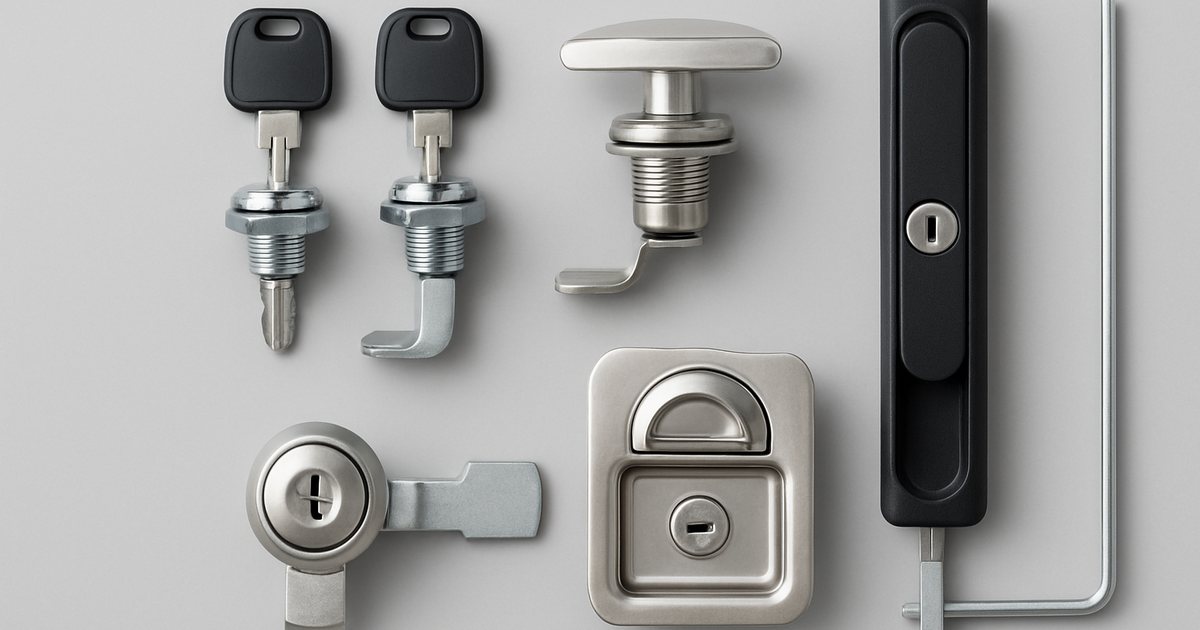
Cabinet Lock Market 2026: Size & Price Guide
Why the published reports disagree, where industrial demand is actually growing, what cabinet locks cost ex-factory, and what they cost once they land — from a lock manufacturer in Ningbo since 1988.
Quick Answer
The global cabinet lock market is worth roughly USD 1.5–2.1 billion in 2026, depending on which report you read. Three of four major reports grow it at 4.5–4.9% a year; the 11.84% outlier includes smart locks. The reports under-count industrial enclosure locks — EV charging, battery storage, data centre and telecom cabinets — which is where value is growing fastest. Ex-factory, cabinet locks run from $0.50 for a zinc cam lock to $150 for an electronic lock; for US importers, the tariff layer moves landed cost far more than freight does.
If you are sizing a product line, building a sourcing budget or writing a board paper, you have probably already found the cabinet lock market reports. You have also probably noticed they do not agree with each other. One says the market will be worth $2.3 billion in 2035; another says $4.16 billion by 2032. Both cannot be describing the same thing.
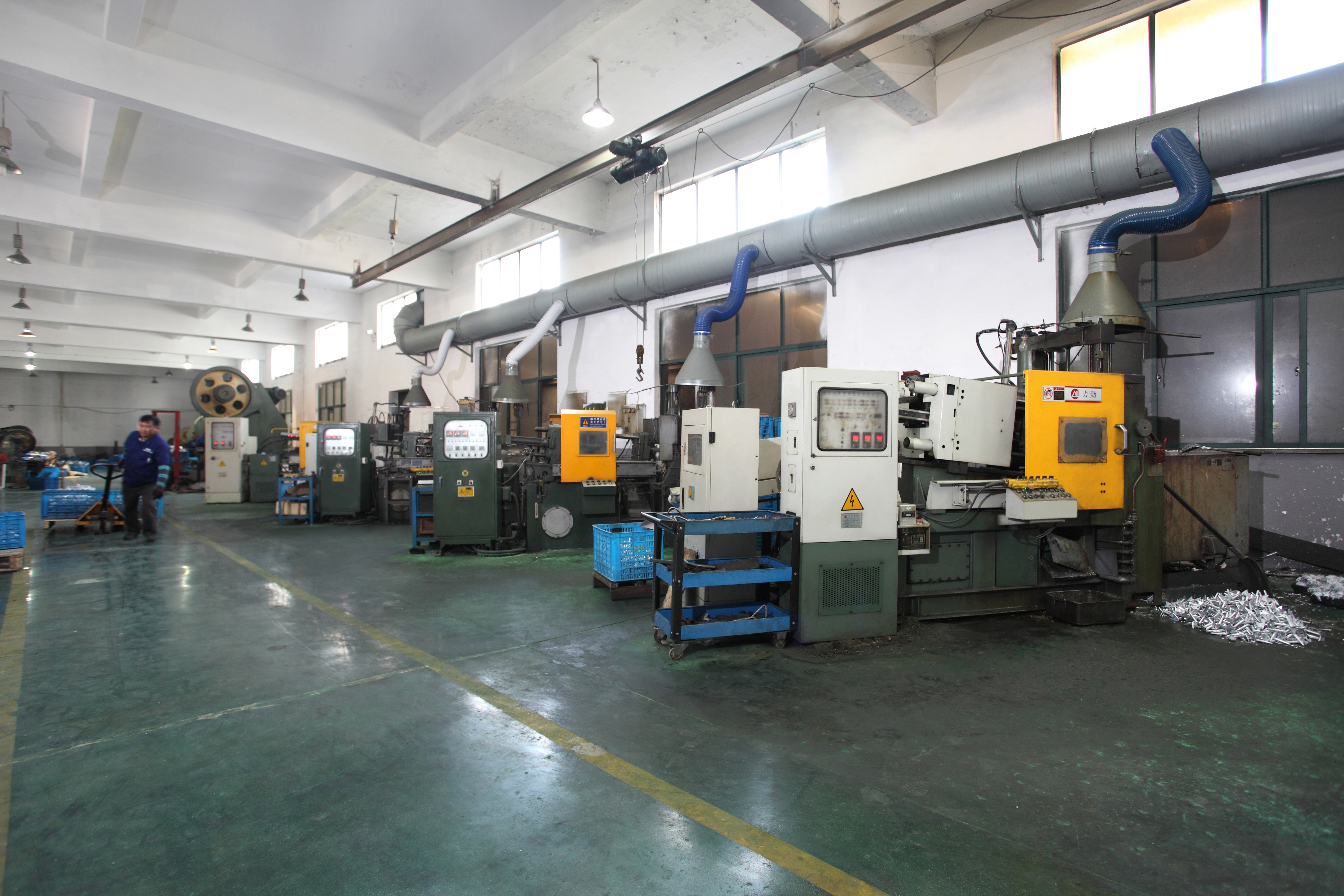
We are a lock and latch manufacturer, not a research firm. We die cast, machine, plate and assemble cam locks, compression latches, swing handles and panel locks in Ningbo, and we have quoted cabinet hardware to OEMs in more than 20 countries since 1988. So this page does two things the reports do not: it explains why their numbers differ, and it adds the data a buyer actually needs — ex-factory price bands, where supply sits, and what a lock costs once it lands.
1. How Big Is the Cabinet Lock Market?
Here are the four estimates that dominate the first page of search results, normalised to the same year so you can compare them directly. The 2026 column is our calculation from each report’s own base value and CAGR.
| Source | Base year value | CAGR | Forecast | Implied 2026 |
|---|---|---|---|---|
| Market Research Future | $1.67B (2023) | 4.56% (2024–2032) | $2.50B by 2032 | ~$1.91B |
| Verified Market Reports | $1.70B (2024) | 11.84% (2025–2032) | $4.16B by 2032 | ~$2.13B |
| Business Research Insights | $1.50B (2026) | 4.9% (2026–2035) | $2.30B by 2035 | $1.50B |
| Other widely cited estimate | $1.30B (2023) | 4.9% (to 2032) | $1.90B by 2032 | ~$1.50B |
Normalised to 2026, the spread is $1.50B to $2.13B — a 42% gap for the same year. By 2032 it widens to more than 2× ($1.9B versus $4.16B), because one report compounds at more than twice the rate of the others.
Business Research Insights also gives the most useful split: mechanical locks about 67% of demand, electronic about 33%; residential about 56% of installations and commercial about 44%; North America about 36%, Europe 29%, Asia-Pacific 27%. It names ASSA ABLOY (around 18% share) and dormakaba (around 11%) as the largest players — both primarily architectural and residential lock companies.
2. Why the Reports Disagree by 42%
None of these firms is wrong, exactly. They are measuring different things and labelling them all “cabinet locks”. Before you put any of these numbers in a business case, check four things.
| Variable | What changes | Effect on the number |
|---|---|---|
| Scope of lock types | Some reports count smart, biometric and keypad locks inside the total; others are mechanical-led | Largest single driver. Smart locks grow at double digits, so including them pulls CAGR from ~5% to ~12% |
| End-use coverage | Most weight residential and office furniture; industrial enclosures are folded into “commercial” or left out | Under-counts the highest-value segment (stainless, multi-point, electronic) |
| Value basis | Manufacturer revenue vs distributor or retail value | A $0.80 ex-factory cam lock sells for $4–$9 at retail; mixing bases can inflate totals several-fold |
| Base year | 2023, 2024 or 2025 starting point | Small on its own, but compounds with CAGR over a 9–10 year forecast |
Our read, for planning: a mechanical cabinet lock market of about $1.5–1.9 billion growing at around 5% a year is the defensible middle. Treat anything near 12% as a smart-lock forecast, not a cabinet hardware forecast. And treat the residential/commercial split as describing the furniture market — because, as the next section shows, industrial enclosure hardware behaves very differently.
Budgeting a new enclosure or cabinet line?
Send us your door count, panel thickness and environment. We will return part numbers, FOB prices at your volumes and a cutout drawing within 24 hours. Request a quote for this product →
3. The Segment the Reports Miss: Industrial Enclosures
The cabinet lock reports are built around furniture, lockers and office storage. Thelocks on electrical panels, telecom cabinets, EV chargers and server racks sit mostly outside that frame. They follow a different market: electrical enclosures, which analysts put at $7.83–8.98 billion in 2025, growing 5.6–7.8% a year (Fortune Business Insights, SNS Insider, Expert Market Research, Mordor Intelligence).
The economics of that segment are different in one important way: the lock is a tiny share of what the customer pays, but a large share of what goes wrong in the field. This is how it looks on typical enclosures we supply hardware for.
| Enclosure | Typical locking hardware | Hardware value (FOB) | Enclosure price | Lock share |
|---|---|---|---|---|
| Wall-mount steel box, IP66, 400×300 | 2 × quarter-turn or cam lock | $1–$4 | $60–$150 | 2–3% |
| Floor-standing control cabinet, 2000×800 | Swing handle + 3-point rod | $8–$20 | $800–$2,000 | ~1% |
| 42U server rack | Keyed swing handle or electronic handle, front + rear | $6–$60 | $600–$2,500 | 1–3% |
| Outdoor telecom cabinet | 304 SS swing handle, rod, compression latches | $25–$55 | $1,500–$4,000 | 1–2% |
| DC fast-charger cabinet | Keyed SS multi-point, tamper-resistant fasteners | $20–$60 | $15,000–$40,000 | <0.5% |
| Battery storage (BESS) cabinet | SS compression + padlockable handle | $30–$80 | $40,000+ | <0.2% |
Hardware values are indicative from our own quotes; enclosure prices are typical published list ranges. Not a survey.
When the lock is 0.2% of a battery cabinet, nobody chooses it on unit price. They choose it on whether it keeps IP66 after five years of UV and thermal cycling, whether it survives a pry bar, and whether one service truck roll — typically $150–$400 — can be avoided. That is why industrial buyers are moving to stainless, multi-point and keyed systems even as furniture lock prices stay flat. It is also why ourzinc vs stainless comparisonis one of the most-read pages on this site.
4. Where Demand Is Growing in 2026
We see growth in the enquiries that reach us before it shows up in any report. In 2026 the new enquiries cluster in five applications, and each pulls the specification in a clear direction.
| Application | What is driving it | Where the spec is moving |
|---|---|---|
| EV charging cabinets | Public DC charger build-out; unattended sites | Keyed 304 SS swing handles, multi-point rods, tamper-resistant fixings |
| Battery energy storage (BESS) | Utility and C&I storage; ESS codes (NFPA 855, UL 9540 listings) push restricted, lockable access | Padlockable handles for lockout/tagout, IP55–IP66 compression sealing |
| Data centre & edge racks | AI capacity build-out; micro data centres outside secured rooms | Electronic / RFID handles with audit trail, replacing master-keyed mechanical |
| Outdoor telecom | 5G small cells, roadside and rooftop cabinets | 304/316 SS, IP66, adjustable-stroke compression latches |
| Machine & automation panels | Factory automation, retrofits | Zinc/chrome quarter-turn and compression, one standard cutout across ranges |
Two consequences follow. First, value is growing faster than volume: a stainless multi-point set replaces two zinc cam locks at 5–10× the price. Second, electronic locks are moving from lockers into racks and cabinets. The one-third electronic share in the reports is real, but in industrial cabinets it is still far lower — most outdoor enclosures remain mechanical because there is no power or network at the door. That is where anIoT cabinet lock with a battery or NFC-powered cylinder is starting to win. For the security side of these applications, see ourEV charger and BESS enclosure lock guide and ourserver rack lock guide.
5. Factory Price Bands by Lock Type
No market report publishes prices. These are indicative FOB Ningbo prices at 1,000 pcs with a standard finish from our own price list. Custom finishes, keying and volume all move them — but they will tell you instantly whether a quote is in the right range.
| Lock type | Zinc alloy | Stainless steel | Where it is used |
|---|---|---|---|
| Cam lock (flat key) | $0.50–$1.50 | $1.80–$4.50 (304) | Furniture, lockers, light enclosures |
| Quarter-turn (tool-operated) | $0.80–$2.50 | $2.50–$6.00 | Access panels, racks, machine guards |
| Compression latch | $2.40–$6.00 | $5.80–$11.00 (304) / $8.50–$16.00 (316) | Sealed IP65–IP69K enclosures |
| Swing handle + rod set | $3.50–$9.00 | $8.00–$22.00 | Tall cabinets, telecom, EV chargers |
| Paddle / T-handle lock | $3.00–$8.00 | $6.00–$15.00 | Vehicle toolboxes, gensets, outdoor doors |
| Electronic / IoT cabinet lock | $20–$150 depending on Bluetooth, RFID, NFC or networked control | Racks, lockers, unattended sites | |
What moves a price inside those bands, in order of impact:
- Material and process. Stainless is machined or investment cast rather than die cast, which is why it costs 2–3× zinc for the same function.
- Finish. Chrome plating is standard; powder coat is similar; electro-polishing stainless adds $1.00–$2.00 per piece.
- Keying. Keyed-alike or master-keyed systems add roughly $0.10–$0.30 per lock over random keying. See our cam lock guide for how keying systems work.
- Custom geometry. A custom cam length is usually free above MOQ; a custom body needs new die tooling.
- Zinc price. Zinc alloy (Zamak) ingot tracks the LME zinc price. For multi-year programmes, ask for a price-review clause indexed to it rather than paying a risk premium up front.
6. Where Cabinet Locks Are Made
The brands on the lock may be American, German or British — Southco, EMKA, DIRAK and Essentra are the names most industrial buyers know. The die-cast bodies, cylinders and stampings behind a large share of the world’s cabinet locks come from a handful of Chinese clusters, each with its own specialty.
| Cluster | Province | Specialty | Best for |
|---|---|---|---|
| Wenzhou | Zhejiang | Known as China’s “Lock Capital”; architectural, smart and furniture locks | Door and furniture lock programmes |
| Ningbo (Yinzhou, Cixi, Yuyao) | Zhejiang | Industrial locks, latches and hinges; zinc/aluminium die casting; next to Ningbo-Zhoushan port | Enclosure, cabinet and vehicle hardware |
| Pujiang | Zhejiang | Padlocks — 700+ producers, about ¥3.8 billion annual output | Padlocks and hasps |
| Zhongshan (Xiaolan) | Guangdong | Architectural and furniture locks, hardware | Residential and furniture programmes |
Ningbo’s Yinzhou district alone had more than 1,000 hardware trading and manufacturing companies, over 90% of them exporters, and more than $2 billion in hardware exports in 2020. For an industrial buyer, the practical point is that the cluster determines the supplier’s instincts: a Wenzhou door-lock maker and a Ningbo enclosure-latch maker will quote the same drawing very differently. Ourguide to sourcing industrial hardware from China covers how to audit either.
7. Landed Cost: Duty, Freight & the Number That Matters
Cabinet locks are dense and valuable per kilogram, which makes their landed-cost structure unusual: freight barely matters, and the tariff layer dominates.
Freight as a share of FOB
| Item | Unit weight | FOB | Value per kg | Freight per unit* | Freight % of FOB |
|---|---|---|---|---|---|
| Zinc cam lock | 45 g | $0.80 | $18/kg | $0.01–$0.03 | 1.7–3.4% |
| Zinc compression latch | 150 g | $3.50 | $23/kg | $0.05–$0.09 | 1.3–2.6% |
| 304 SS swing handle + rod set | 650 g | $14.00 | $22/kg | $0.20–$0.39 | 1.4–2.8% |
| Electronic cabinet lock | 300 g | $45.00 | $150/kg | $0.09–$0.18 | 0.2–0.4% |
*Assumes $0.30–$0.60 per kg all-in ocean freight, Ningbo to a US or EU port, for a mid-size LCL or shared-container shipment including origin charges. Your forwarder’s rate will differ; the order of magnitude will not.
Duty: the stable layers and how to check the rest
We deliberately do not print a single “total duty” figure. China-specific US tariff layers have changed several times since 2025, and a page that states today’s total will be wrong within months while still looking authoritative. Here is what is stable, and how to get the rest right.
| Layer | United States | European Union |
|---|---|---|
| Tariff code (base-metal cabinet locks) | HTS 8301.40.60 | CN 8301 40 90 |
| General / MFN duty | 5.7% | 2.7% (confirm your 10-digit code in TARIC) |
| China-specific layers | Section 301 List 3: 25%; other layers vary — check | None specific to this heading at time of writing |
| Fees | MPF 0.3464%, HMF 0.125% (sea) | Import VAT at the member-state rate (usually recoverable) |
| Where to verify | hts.usitc.gov → Chapter 99 notes → CBP CSMS messages → broker confirmation in the week of shipment | EU TARIC database for your 10-digit code |
Worked example: 5,000 compression latches into the US
5,000 zinc compression latches at $3.50 FOB = $17,500. Ocean freight at about 750 kg: roughly $340. MFN duty at 5.7%: $998. Section 301 at 25%: $4,375. MPF and HMF: about $83. Landed before brokerage and inland delivery: about $23,300, or $4.66 per latch — 1.33× FOB, before any additional China-specific layer in force when you ship.
Freight is under 2% of that. The Section 301 layer alone is 25%. So when a buyer asks us how to reduce landed cost, the answer is almost never “ship differently”. It is one of three things: consolidate SKUs to reach better price breaks, specify zinc where stainless is not needed, or re-engineer multi-lock doors so fewer, better locks do the job. On EU shipments, where duty is 2.7%, the ex-factory price is the whole game.
8. What This Means If You Buy Cabinet Locks
Market reports are written for investors. If you are the person who has to specify, buy and live with these parts, the 2026 picture translates into six practical moves.
- Standardise cutouts across your range. One body and one panel cutout, with only cam length and finish varying, consolidates volume into a single price break and a single punch in your sheet metal cell.
- Split zinc and stainless by environment, not by habit. Indoor control panels do not need 304; coastal telecom cabinets need 316. The price gap is 2–3×.
- Decide your key system before volume ramps. Changing from random keys to keyed-alike or master-keyed later means re-stocking every spare. Our cabinet lock types guide compares security levels.
- Plan for electronic on racks and unattended sites. Specify a cutout that accepts both a mechanical and an electronic handle now, so you can upgrade without re-tooling the door.
- Index zinc, fix everything else. A price-review clause tied to LME zinc is fairer to both sides than a padded fixed price on a three-year programme.
- Own your tooling. If you pay for a custom die, the contract should say who owns it and where it lives. Our OEM hardware manufacturing guide sets out the terms we use.
| Commercial term | Catalogue lock | Custom lock |
|---|---|---|
| MOQ | 500 pcs | 2,000 pcs (custom cam, keying or handle) |
| Samples | ~7 days from stock | After tooling approval |
| Production lead time | 25–35 days | 25–35 days after sample sign-off |
| New die tooling | Not needed | 30–45 days, quoted separately, retained for the customer |
| Certification | IATF 16949, ISO 9001; RoHS-compliant finishes; salt spray per ASTM B117 on request | |
If you want to see what customisation covers in practice — finishes, keying, logo marking, custom cams — our customization page lists the options, and our panel lock range shows the standard bodies most OEM programmes start from.
9. FAQ
How big is the cabinet lock market in 2026?
Published estimates put the global cabinet lock market at roughly USD 1.5–2.1 billion in 2026, depending on the report. Three of the four widely cited reports grow at 4.5–4.9% a year; the outlier at 11.84% counts smart and biometric locks inside the same total. For planning purposes, a mechanical-lock market of about USD 1.5–1.9 billion growing at around 5% a year is the defensible middle.
Why do cabinet lock market reports give such different numbers?
Four reasons: different base years (2023, 2024 or 2025), different scope (some include electronic, smart and biometric locks, some do not), different end-use coverage (most weight residential and office furniture, few count industrial enclosure hardware properly), and different value bases (manufacturer revenue versus retail or installed value). The same underlying market can therefore be reported as USD 1.5 billion or USD 2.1 billion for the same year.
Which part of the cabinet lock market is growing fastest?
Industrial enclosure locking is growing faster than the residential and office furniture segment. The drivers are EV charging cabinets, battery energy storage (BESS) enclosures, edge and AI data centre racks, and outdoor telecom cabinets. These applications buy stainless steel, multi-point, IP66-rated and increasingly electronic locks, so value is growing faster than unit volume. Electronic locks are already about one third of cabinet lock demand by one estimate.
How much do industrial cabinet locks cost from a Chinese factory?
Indicative FOB Ningbo prices at 1,000 pcs with a standard finish: zinc alloy cam locks USD 0.50–1.50, stainless cam locks USD 1.80–4.50, zinc compression latches USD 2.40–6.00, 304 stainless compression latches USD 5.80–11.00, swing handle and rod sets USD 3.50–22.00 depending on material, and electronic or IoT cabinet locks USD 20–150 depending on the access technology.
What is the US import duty on cabinet locks from China?
Most base-metal cabinet locks classify under HTS 8301.40.60 with a 5.7% general (MFN) duty. Chinese-origin goods under this heading have also carried a 25% Section 301 List 3 duty, plus the 0.3464% Merchandise Processing Fee and 0.125% Harbor Maintenance Fee. Additional China-specific tariff layers have changed several times since 2025, so confirm the total rate with your customs broker in the week the goods ship.
Where are most cabinet locks manufactured?
A large share of the world’s zinc die-cast lock hardware is produced in China, concentrated in Zhejiang province (Wenzhou for architectural and furniture locks, Ningbo for industrial enclosure locks and latches, Pujiang for padlocks) and in Zhongshan, Guangdong. The leading industrial enclosure hardware brands are headquartered in the United States, Germany and the United Kingdom.
What MOQ and lead time should I expect for OEM cabinet locks?
At our factory the MOQ is 500 pcs for catalogue locks with a standard finish and 2,000 pcs for custom cam lengths, custom keying or bespoke handles. Samples ship in about 7 days from stock, production takes 25–35 days, and new die tooling for a fully custom body takes 30–45 days and is quoted separately.
Sources: Market Research Future, Verified Market Reports and Business Research Insights cabinet lock market reports; Fortune Business Insights, SNS Insider, Expert Market Research and Mordor Intelligence electrical enclosure market reports; USITC Harmonized Tariff Schedule; EU TARIC. Price, weight and lead-time data are Hengchieh factory figures and are indicative.
Related Guides
Cabinet Lock Types
7 lock types, security levels and how to choose
Sourcing Industrial Hardware from China
Supplier audits, MOQ, tooling ownership
Zinc Alloy vs Stainless Steel Locks
Cost, corrosion and performance compared
Compression Latches by Application
Server racks, washdown, outdoor, HVAC, genset
Paddle Latch Guide
Types, sizing, keying & flush-mount selection
Types of Toolbox Locks
8 lock types compared, replacement guide
Request a Quote for Your Cabinet Lock Programme
Cam locks, compression latches, swing handles and IoT locks made in Ningbo since 1988. Zinc, 304 and 316 stainless. IATF 16949 and ISO 9001 certified. MOQ 500 pcs, samples in 7 days, reply within 24 hours.