What Is Zamak? Zamak 3 vs 5 for Die Casting
Zamak is the workhorse alloy of the die casting world. If you have ever used a door handle, turned a cam lock, flipped a toggle latch, or buckled a seatbelt — you have touched Zamak. As a manufacturer that has been hot-chamber die casting Zamak for 35+ years, running molds well past 500,000 shots, we will explain everything a buyer or engineer needs to know about this material family.
What Is Zamak?
Zamak is a family of zinc-based die casting alloys developed by the New Jersey Zinc Company in 1929. The name is a German acronym: Zink, Aluminium, MAgnesium, Kupfer (copper). All Zamak alloys share the same base composition: approximately 96% zinc, 4% aluminum, with trace amounts of magnesium and varying amounts of copper depending on the grade.
The genius of Zamak was solving the "zinc pest" problem that plagued earlier zinc castings. By controlling impurity levels (lead, tin, and cadmium below 0.005%) and adding precise amounts of aluminum and magnesium, the alloy achieves stable dimensional properties that last decades without the intergranular corrosion and swelling that destroyed early zinc castings.
Zamak 3 vs Zamak 5 vs Zamak 2 vs Zamak 7
| Property | Zamak 3 | Zamak 5 | Zamak 2 | Zamak 7 |
|---|---|---|---|---|
| Copper (%) | 0.00 | 1.00 | 3.00 | 0.00 |
| Aluminum (%) | 3.9-4.3 | 3.9-4.3 | 3.9-4.3 | 3.9-4.3 |
| Tensile Strength (MPa) | 283 | 331 | 359 | 283 |
| Hardness (HB) | 82 | 91 | 100 | 80 |
| Elongation (%) | 10 | 7 | 7 | 13 |
| Plating Quality | Excellent | Very Good | Good | Excellent |
| Castability | Excellent | Excellent | Good | Best |
| Cost | Lowest | Low | Moderate | Moderate |
| Market Share | ~70% | ~25% | ~3% | ~2% |
Zamak 3 — The Universal Standard
Zamak 3 accounts for roughly 70% of all zinc die castings worldwide. Zero copper content gives it the best dimensional stability over time (critical for precision parts like locks), the best plating adhesion for decorative chrome finishes, and the lowest raw material cost. At Hengchieh, approximately 80% of our lock and hardware production uses Zamak 3. If you are unsure which grade to specify, Zamak 3 is almost certainly correct.
Zamak 5 — When You Need More Strength
The 1% copper addition in Zamak 5 increases tensile strength by about 17% and hardness by about 11% compared to Zamak 3. We specify Zamak 5 for parts that experience repeated mechanical stress — swing handle lock mechanisms, heavy-duty toggle latches, load-bearing brackets, and automotive interior trim components. The trade-off is slightly reduced elongation (7% vs 10%) and marginally lower plating quality, though both are still excellent for most applications.
Zamak 2 — Maximum Hardness
With 3% copper, Zamak 2 is the strongest and hardest Zamak alloy. We use it for bearing bushings, wear surfaces, and parts that require self-lubricating properties. However, its higher cost and slightly reduced castability limit it to specialized applications — perhaps 3% of our total zinc production.
Zamak 7 — Best Fluidity
Zamak 7 is a modified Zamak 3 with tighter magnesium control and lower impurity limits. Its superior fluidity makes it the best choice for ultra-thin-walled parts (down to 0.5mm) and parts requiring the lowest possible porosity. We use it for precision connector housings and EMI shielding enclosures where surface finish and porosity matter most.
How Zamak Die Casting Works
Zamak is exclusively cast using hot-chamber die casting machines. Unlike aluminum (which uses cold-chamber machines), Zamak's low melting point (380-390°C) allows the injection mechanism to sit immersed in the molten metal bath — this is what enables Zamak's signature fast cycle times of 15-30 seconds per shot.
Our hot-chamber machines range from 88 to 400 tons of clamping force, producing parts from 5 grams (small lock cylinders) to 2 kilograms (large panel lock assemblies). A typical production run looks like this: mold closes → molten Zamak injected at 10-40 MPa → metal solidifies in 3-5 seconds → mold opens → part ejected → cycle repeats every 15-30 seconds.
This speed is Zamak's hidden economic advantage. An aluminum die casting machine running 45-90 second cycles produces 40-80 parts per hour. The same size Zamak machine produces 120-240 parts per hour — 3× the throughput from the same capital equipment.
What Is Zamak Used For?
Zamak's combination of precision, surface quality, and cost efficiency makes it dominant in several key industries:
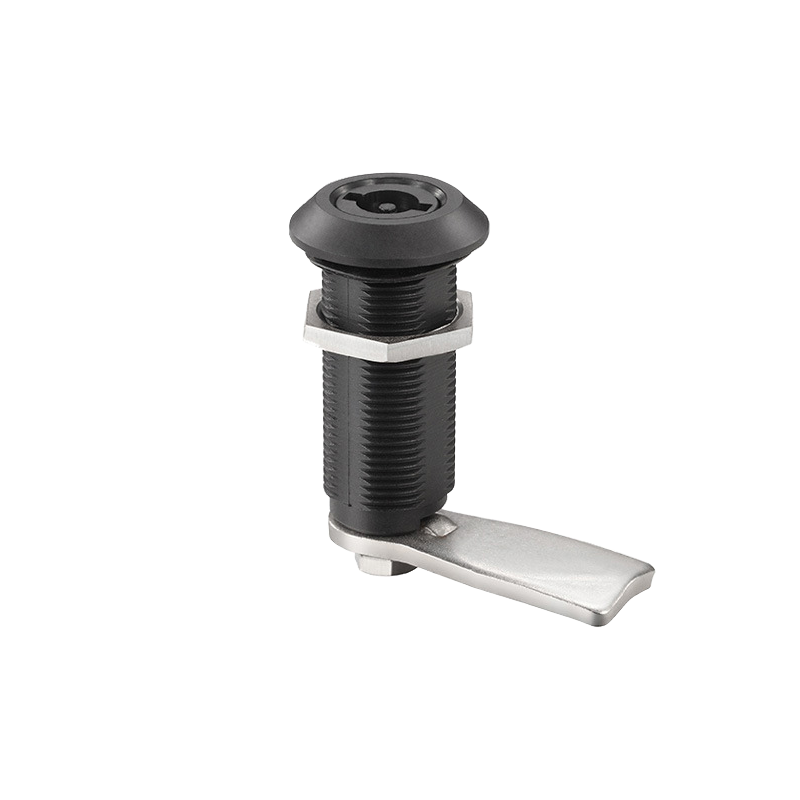
Locking hardware: Cam locks, panel locks, plane locks, cylinder locks, padlocks, and automotive door locks. The tight tolerance capability (±0.03mm) is essential for key-and-tumbler mechanisms where pin positions must be precise to fractions of a millimeter.
Furniture and architectural hardware: Handles, knobs, hinges, catches, closures, and decorative fittings. Zamak's unmatched plating quality produces the mirror chrome and satin nickel finishes that premium furniture brands require.
Automotive: Interior trim, seat adjustment mechanisms, mirror brackets, door handles, and emblem badges. IATF 16949 quality systems ensure consistency across high-volume production runs.
Electronics: Connector housings, EMI shields, terminal blocks, and switch bodies. Zamak provides excellent electromagnetic shielding — better than aluminum — in compact form factors.
Consumer products: Zipper sliders, belt buckles, bottle openers, toy components, and sporting goods hardware. High-volume, cost-sensitive applications where Zamak's fast cycle time and low per-unit cost shine.
Frequently Asked Questions
What does Zamak stand for?
Is Zamak the same as zinc alloy?
Zamak 3 or Zamak 5 — which should I choose?
How much does Zamak die casting cost?
Need Zamak die casting for your project?
Send us your drawings or 3D files. Free DFM analysis with Zamak grade recommendation within 48 hours.
Related: Zinc Alloy Die Casting Parts · Does Zinc Alloy Tarnish? · Aluminum vs Zinc Die Casting · Custom Die Casting OEM Guide · Compression Latch Guide · Paddle Latch Guide · Toggle Latches Guide