
Does Aluminum Rust? Corrosion Science Explained
We get asked this question constantly — from engineers spec'ing materials for outdoor enclosures, to procurement managers comparing aluminum versus steel for automotive parts, to end users wondering if their aluminum door hardware will hold up. After 35+ years of manufacturing aluminum die castings and watching them perform in real-world environments from tropical Ningbo to arctic Scandinavia, here is the straightforward answer.
No, aluminum does not rust. Rust is iron oxide, and aluminum contains zero iron. But aluminum can corrode — and understanding the difference between rust and corrosion is critical for choosing the right material and surface treatment for your application.
Rust vs Corrosion: The Critical Difference
Iron rust (Fe₂O₃) is destructive because it flakes off. When iron rusts, the oxide layer cracks, peels away, and exposes fresh metal underneath to further attack. This cycle continues until the entire part is consumed. A steel bolt left outdoors will eventually disintegrate.
Aluminum oxidation (Al₂O₃) works in the exact opposite way. When aluminum contacts air, it instantly forms a thin, transparent oxide layer (about 2-3 nanometers thick) that bonds tightly to the surface and blocks further oxygen from reaching the underlying metal. This layer is self-healing — if scratched, new oxide forms within milliseconds. This is why uncoated aluminum can last decades outdoors while uncoated steel cannot.
The oxide layer on aluminum is so useful that the entire anodizing industry exists to make it thicker on purpose. Anodizing artificially grows the oxide layer from 2-3 nm to 5,000-25,000 nm (5-25 microns), creating an extremely hard, corrosion-resistant surface.
When Does Aluminum Actually Corrode?
While aluminum's natural oxide layer provides excellent protection under normal conditions, there are specific environments that can cause aluminum corrosion:
Saltwater and marine environments. Chloride ions in salt water can penetrate aluminum's oxide layer, causing pitting corrosion — small holes that gradually deepen. This is why marine-grade aluminum (5052, 5083, 6061-T6) with anodizing is standard for boat hardware. Our standard die casting alloy ADC12 is not recommended for direct saltwater exposure without surface treatment.
Galvanic corrosion (dissimilar metals). When aluminum contacts a more noble metal (copper, brass, stainless steel) in the presence of moisture, the aluminum acts as the anode and corrodes preferentially. This is why you should never use copper rivets in aluminum panels or let steel fasteners contact aluminum enclosures without insulating washers. We see this problem regularly in outdoor cabinet hardware installations.
Extreme pH environments. Aluminum's oxide layer is stable between pH 4 and pH 9. Strong acids (pH < 4) and strong alkalis (pH > 9) dissolve the oxide layer. Wet concrete and plaster are alkaline enough (pH 12-13) to corrode aluminum — this is why aluminum window frames embedded in concrete must be isolated with sealant.
High temperature + humidity. Above 200°C, aluminum's oxide layer begins to break down. In humid environments above 80°C, white corrosion product (aluminum hydroxide) can form. Our die-cast parts for engine compartments are always e-coated or powder-coated for this reason.
Aluminum vs Zinc vs Steel: Corrosion Comparison
| Property | Aluminum | Zinc Alloy | Carbon Steel | Stainless Steel |
|---|---|---|---|---|
| Rusts? | No | No (white corrosion) | Yes (red rust) | Rarely (pitting possible) |
| Natural protection | Excellent (self-healing oxide) | Moderate | None | Excellent (chromium oxide) |
| Outdoor life (uncoated) | 15-30+ years | 2-5 years | 1-3 years | 20-50+ years |
| Salt spray (uncoated) | 200-500 hrs | 24-72 hrs | 8-24 hrs | 500-2000+ hrs |
| Best protection | Anodizing | Chrome plating | Galvanizing/painting | Passivation |
| Weight (density) | 2.7 g/cm³ | 6.7 g/cm³ | 7.9 g/cm³ | 8.0 g/cm³ |
How We Protect Aluminum Die Castings
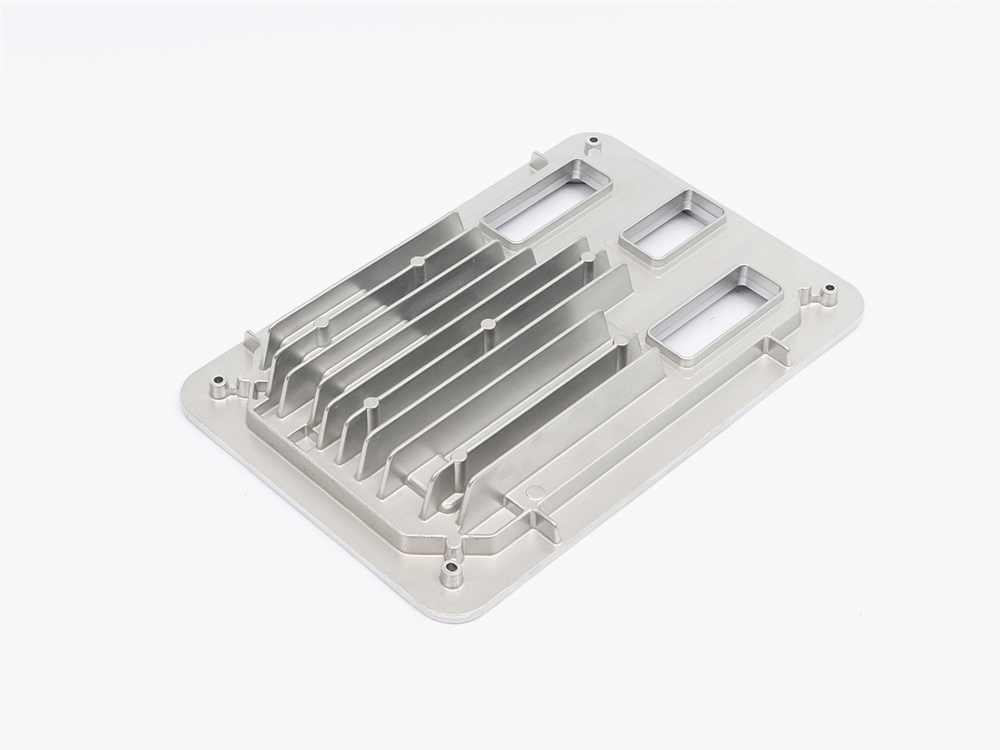
Every aluminum part we ship has surface treatment appropriate for its end use. Here are the four most common methods we use in production:
Anodizing is the gold standard for corrosion protection on aluminum. It electrochemically grows the natural oxide layer from nanometers to 5-25 microns, creating a surface harder than steel that accepts dye colors and provides decades of outdoor protection. We anodize architectural hardware and outdoor enclosure components.
Powder coating provides both corrosion protection and color in one step. A 60-120 micron polymer layer bonds to the aluminum surface, providing 1,000-1,500 hours of salt spray resistance. We powder coat most of our outdoor cabinet and enclosure hardware.
E-coating (electrodeposition) is the automotive industry standard. The part is submerged in a paint bath and an electrical current drives the coating into every crevice and recess, providing uniform 15-25 micron coverage on complex die-cast geometries. All our IATF 16949 automotive parts receive e-coating.
Shot blasting + passivation is the minimum treatment for indoor applications. Controlled abrasive blasting cleans the surface and creates a uniform matte finish, followed by chromate or trivalent chrome passivation for basic atmospheric corrosion protection.
Frequently Asked Questions
Does aluminum rust?
Can aluminum corrode?
Is aluminum or zinc more corrosion resistant?
What is the white powder on aluminum?
Need corrosion-resistant aluminum die castings?
We provide anodizing, powder coating, and e-coating with salt spray test reports. IATF 16949 certified for automotive-grade quality.
Related: Aluminum vs Zinc Die Casting · Does Zinc Alloy Tarnish? · Aluminum Die Casting Parts · A356 Aluminum Guide